Digital Sun, the studio behind Moonlighter, has canceled the public Steam playtest for its next game, ReVamp, over fears of AI-assisted cloning. Kotaku reported the decision on October 19.
According to Kotaku, the studio pointed to "games being reverse-engineered, cloned and published before the original is even out." The first test will instead run with a small Discord group, with sign-ups closing before October 29.
Digital Sun hopes to hold a public test around January, and ReVamp is due in March 2027.
The studio isn't alone. Kotaku noted that Alliance Arts, developer of Drunken Goddess Reflux, canceled its Steam Next Fest demo the week before for the same reason. Next Fest opened on October 19 with more than 8,000 demos.
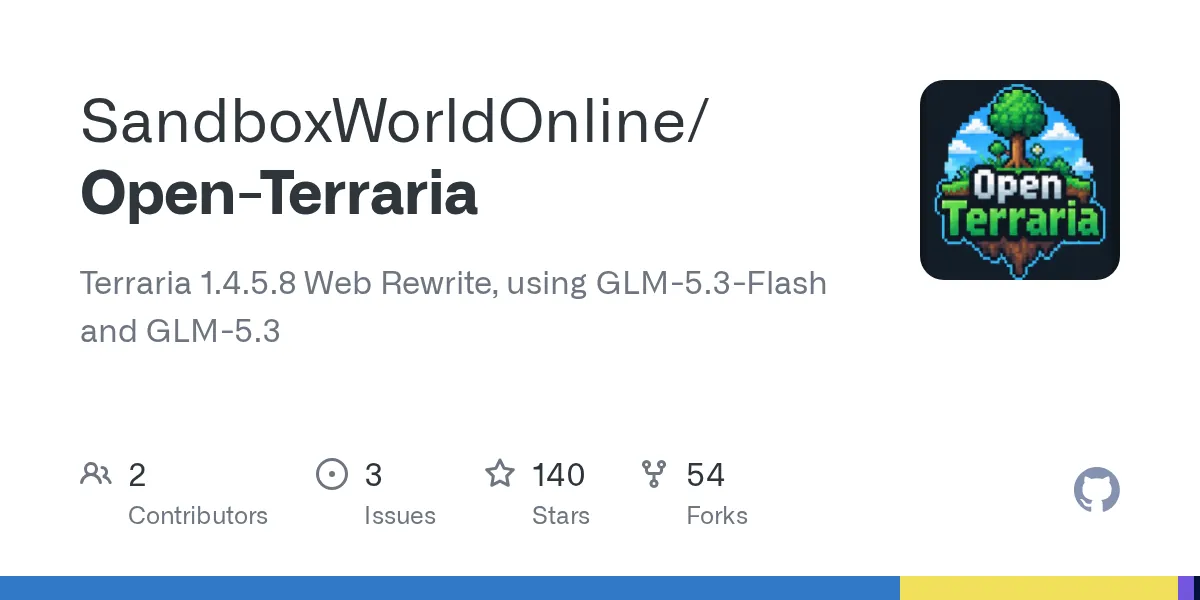
Also on October 19, Open-Terraria appeared on GitHub. It's an unofficial, engine-free web rewrite of Terraria 1.4.5.8 that runs on Canvas 2D and WebGL2, with workers and WASM, at up to 120 fps. It can import vanilla worlds, characters, mods and texture packs, and it's playable at sandboxworld.online.
The project's README says the rewrite took 70 days and 123.8 billion tokens in Claude Code, mostly from GLM-5.3 (47.7B) and GLM-5.3-Flash (76.1B). It lists 7,827 prompts, 124 sessions, 1,484 subagents and 36,815 tool calls.
The output is about 1.5 million lines of TypeScript and more than 2,600 tests. The author says no human wrote any of the code. The repository lists no clear license.
Why it matters: rebuilding a game is no longer a years-long fan effort, since a large agent budget can recreate a commercial game in about 10 weeks. For small studios, that turns public demos, a normal marketing tool, into a risk.
Caveat: Digital Sun's reasoning comes from Kotaku's reporting, and the Open-Terraria figures are the author's own. AIGamer hasn't independently verified them.
Next, watch for more closed playtests and smaller early access groups, more pressure on platforms like Steam to deal with clones, and Digital Sun's planned public ReVamp test around January.