Developers released a cluster of MIT-licensed tools between October 21 and 28 that let coding agents play, measure and check the games they write, according to the projects' GitHub repositories. Most are new and have few stars so far.
Agents can write game code quickly. The harder part is knowing whether it works, and these tools target that gap.
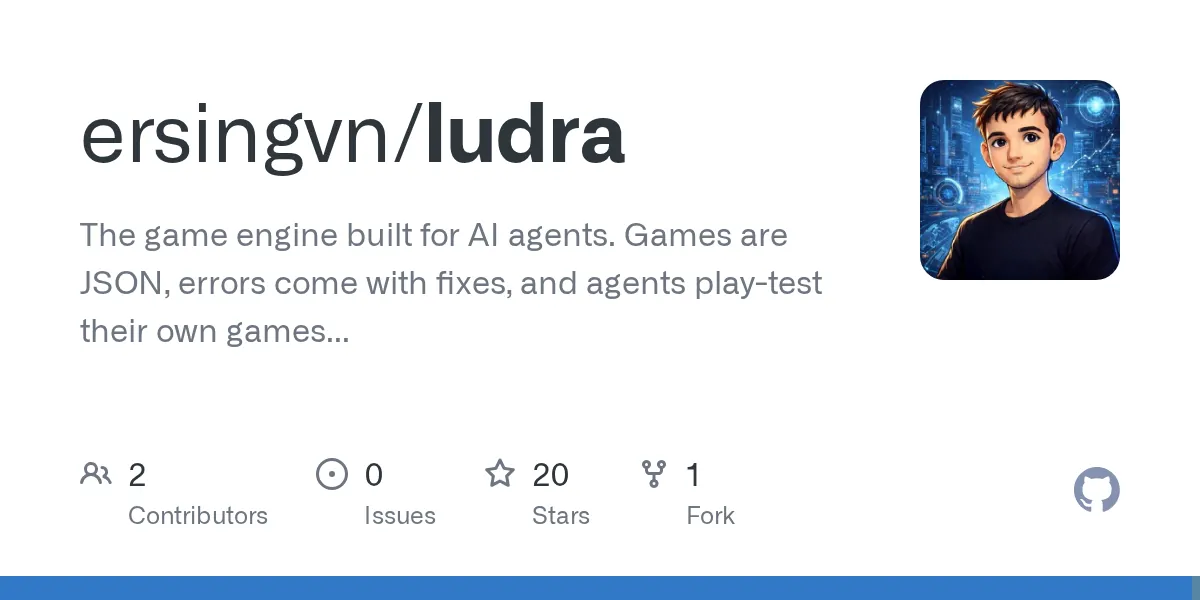
Ludra (v0.91, October 24) is a game engine built for agents. Games are plain JSON, and errors come back as machine-readable fixes. The agent plays headlessly with scripted inputs and runs tests, such as checking for a win with no deaths, before handing the game over.
Ludra supports 2D with Rapier or arcade physics and 3D with Three.js and Rapier 3D. A ludra review command flags unfinished work.
Glitchless (October 21) adds observability, meaning data on how a running game behaves, for Three.js, Phaser, Godot 4.5+ and Unity. It reports frame hitches with likely causes, groups crashes, and shows level funnels, death heatmaps and rage-quits. An MCP server, WebMCP support and autoplay bots let agents confirm their fixes worked.
PlayCanvas Stage (October 21), from the official PlayCanvas team, lets developers click entities or drag areas so Claude Code or Codex receive the entity path, a 3D point and a screen capture. Edits made with the gizmo are written back to the source code.
Engine-specific tools followed. Unity-Playtest-for-Claude (October 28) adds Editor probes, scripted Play Mode runs and host-plus-client multiplayer tests with simulated latency, then produces a pass/fail report.
gg-godot (October 27) is a Claude Code plugin for Godot 4 with agent roles, 9 verification gates, blind QA against contracts and unattended runs. UELRL (October 28) lets AI edit Unreal Engine 5 C++ on Linux and see the change in the running game in about 5 seconds, without restarting the editor.
Why it matters: the tools echo earlier research such as Roblox's OpenGameEval, which found that agents do better when they inspect and test before and after editing. They show where the work is heading: from generating more code to proving that the code works.
Caveat: these are early projects, and their descriptions come from their own repositories. AIGamer hasn't tested them.
What to watch: whether any of these tools gains users beyond its first few stars and becomes a standard part of agent workflows.