In an essay he posted on Substack and as an article on X on November 11, Krajewski wrote that the game was coded entirely by AI, guided by his technical and artistic choices over many rounds of prompts. He says he has programmed for 20 years but stopped reading code about a year ago, and now has the agents explain their own code with dashboards, tests and refactors when needed. The steps below follow his essay. Steam's AI disclosure for the game covers localization, achievement textures and the title card in the trailer; it doesn't mention code.

Black Hole Simulator
- Windows
- macOS
- Linux
- VR (OpenXR)
Summary
Black Hole Simulator is a real-time model of a supermassive black hole, based on Sagittarius A* at the center of the Milky Way, released on Steam on November 10, 2026 for Windows, Mac and Linux, with optional VR. It's a sandbox, not a game with goals: according to its Steam page there are no objectives or mechanics. You explore four imagined planets in orbit, from a gas giant with the black hole shining through its rings to an ocean world swept by tidal tsunamis, while the renderer handles gravitational lensing, a glowing volumetric accretion disk, Doppler brightening and color shifts, and the photon ring around the shadow. Players can change every visual and scientific setting, a built-in readout explains the science, and the views can run as a screensaver or desktop background. It's made by John Krajewski, who signs his posts as CEO of Strange Loop Games, the studio behind Eco, and of DreamForge.
Gameplay
How it was made
Step 1 Run agents in parallel
Krajewski calls his approach massively parallel development. While one agent works, he reviews and redirects another, so his day is spent playing what the agents built and choosing what they try next. As agents get better at working unattended for longer, he can run more of them side by side.
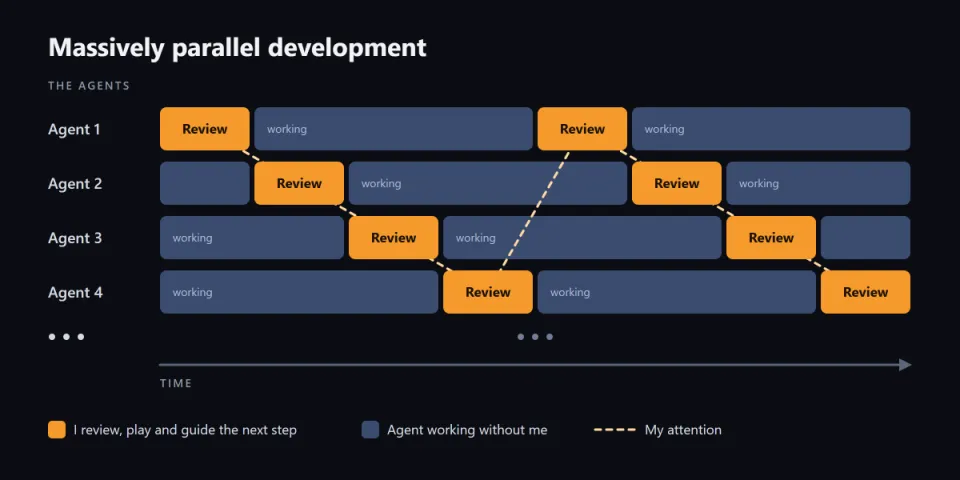
Krajewski's diagram of four agents working in parallel, with his review time moving between them Image: John Krajewski (@jkrajewski), Substack and X Step 2 Steer away from clones
He argues that a game built from one prompt drifts toward familiar designs, since the AI fills anything left unsaid with the safest guess, so he keeps steering by his own taste. Citing Sid Meier's rule of thirds, he says AI can handle the familiar third alone and the improved third with his guidance, leaving him to spend his time on the new third.
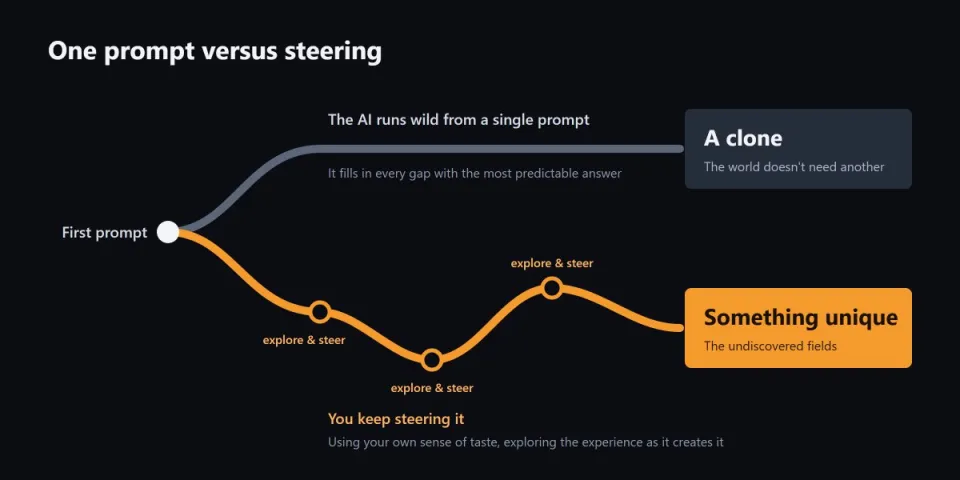
Krajewski's diagram: one prompt leads to a clone, repeated steering leads to something new Image: John Krajewski (@jkrajewski), Substack and X 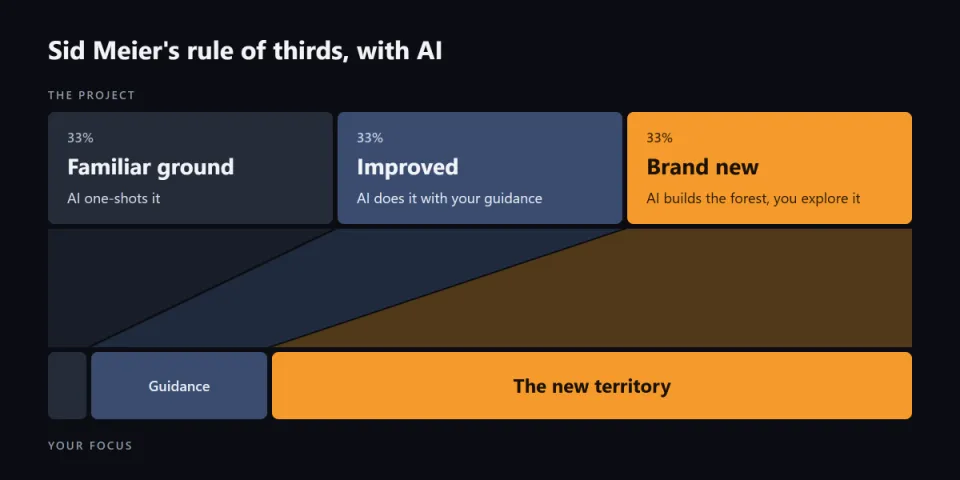
Krajewski's diagram of Sid Meier's rule of thirds applied to AI Image: John Krajewski (@jkrajewski), Substack and X Step 3 Expand the shader, then tune it by hand
Working through AI iterations, he had a simple black hole shader extended until it offered hundreds of adjustable properties. He then adjusted them by hand across many review passes, which is where the game's varied looks come from.
The black hole with the in-game settings panel open beside it Clip: John Krajewski (@jkrajewski), Substack and X Step 4 Point out what moves wrong
Motion is the agents' biggest blind spot, he wrote: mistakes any person would spot, such as a character clipping through a table, go unnoticed until someone flags them. Animation needs the closest supervision, and he says giving agents strict targets, such as AI-generated reference videos, helps them check their work.
One of the orbiting worlds: an icy landscape under the black hole Clip: John Krajewski (@jkrajewski), Substack and X Step 5 Coordinate everything from an Agent Hub
His setup is three PCs running Unity across the repos of several games, with agents working around the clock. An Agent Hub he built with agents hands out tasks, manages accounts for Claude, ChatGPT and DeepSeek models, and collects work in a review queue he can check from his phone, plus a queue for logins that need him.
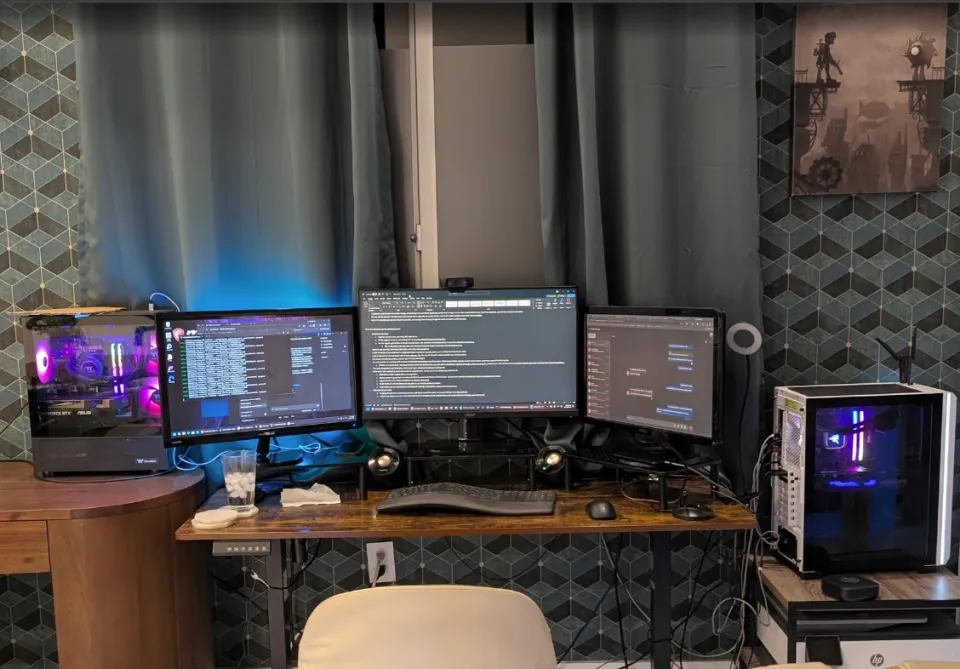
Krajewski's desk with three PCs running agents building in Unity Image: John Krajewski (@jkrajewski), Substack and X 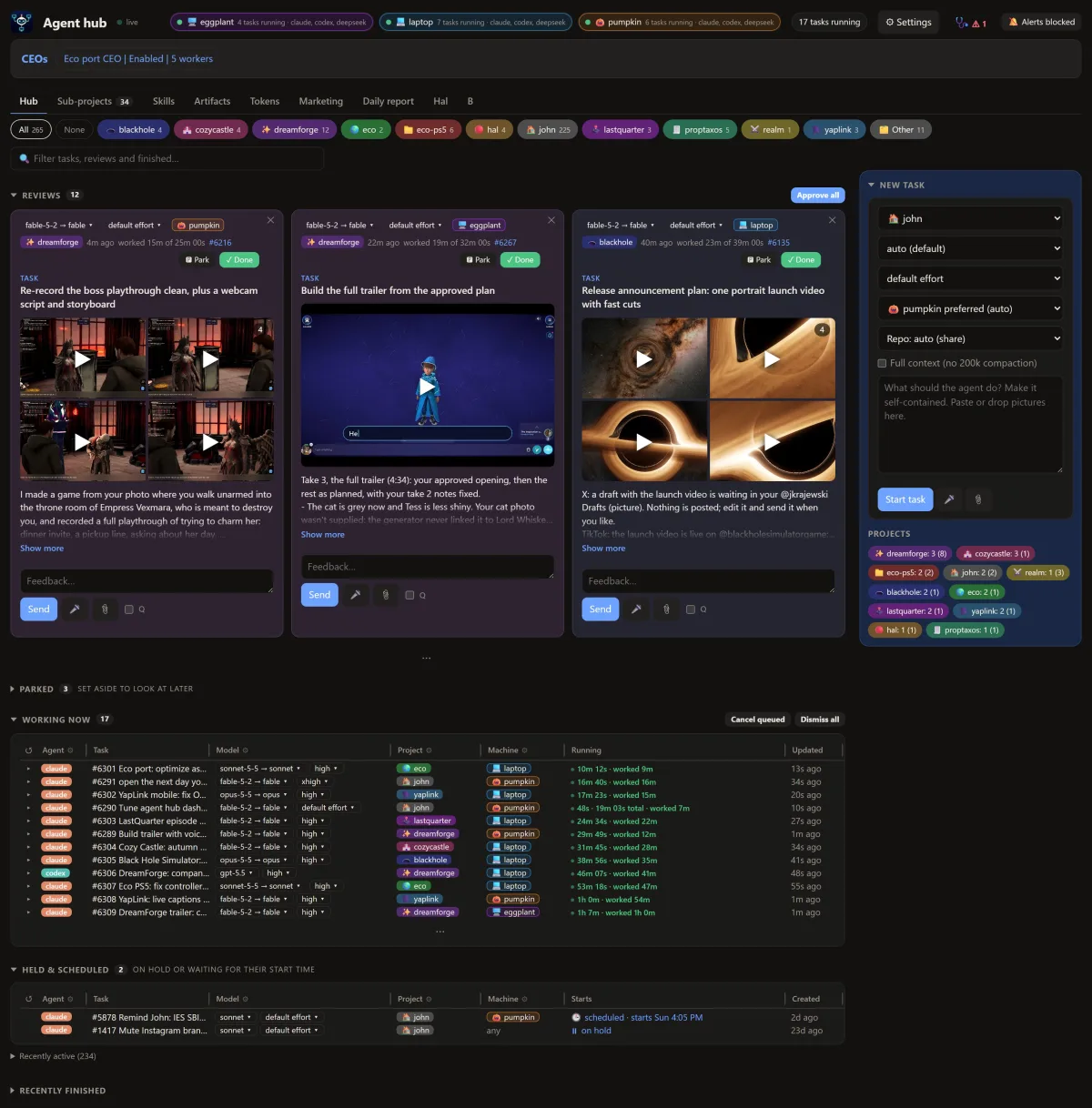
The Agent Hub dashboard, with reviews at the top and running tasks below Image: John Krajewski (@jkrajewski), Substack and X
Krajewski wrote that, because AI is still controversial, Strange Loop doesn't use generative AI on existing projects "out of respect for our current audiences", while its new projects use it heavily and let players opt out. He calls Black Hole Simulator one of several projects he is building in parallel with agents and his human teams, and says he'll share more of them.
Sources
Details come from the developer's own posts and pages credited below.
- John Krajewski on Substack: Exploring the next stage of game development
- John Krajewski (@jkrajewski) on X: "I shipped Black Hole Simulator today" (post linking the same essay as an X article)
- Steam: Black Hole Simulator store page and AI Generated Content Disclosure
- Black Hole Simulator: Official website
Image: Black Hole Simulator (Steam screenshot)
Written in our own words; quotes are marked and credited. How we report