Guide
Best AI 3D model generators for games in 2026: 10 tools compared
Meshy, Tripo, Rodin, Hunyuan3D, TRELLIS 2 and more, compared on price, free tiers, commercial rights, topology and rigging, with what it takes to make AI models game-ready.
Key points
- Check the free tier's license before you ship: Meshy's free models are CC BY 4.0 with credit to Meshy, while Tripo's free models are public and non-commercial.
- For a paid all-rounder, Meshy and Tripo both start at $20 a month with commercial rights, auto-rigging, quad remeshing and engine plugins.
- To run a model yourself, TRELLIS 2 (MIT) needs an NVIDIA GPU with 24GB, and Hunyuan3D 2.1's license excludes the EU, UK and South Korea.
The best AI 3D model generator for a game depends on three things: whether you can use the free models commercially, how much cleanup the mesh needs before it works in an engine, and whether you want a hosted service or a model you run yourself.
- For most game developers, start with Meshy or Tripo. Both turn text or images into textured models, offer quad remeshing and auto-rigging, plug into the major engines, and include commercial rights from $20 a month.
- For very detailed hosted models with plugins for most 3D apps, look at Hyper3D Rodin, which Deemos says can generate up to 10 million polygons.
- To run a model on your own GPU for free, the open options include Tencent's Hunyuan3D 2.1, which ranks highest of them in the 3D Arena leaderboard if its license covers your country, and Microsoft's newer TRELLIS 2 (MIT). Both turn one image into a textured model.
Below are 10 tools as of November 7, 2026, with prices from their own pages. Free tiers differ sharply on whether you can sell what you make.
The 10 generators compared
| Generator | Inputs | Free tier | Cheapest plan with commercial rights | Rigging | Run it yourself? |
|---|---|---|---|---|---|
| Meshy | Text, image, multiple images | 100 credits a month; models are CC BY 4.0 (credit Meshy) | Pro, $20 a month | Yes, humanoids | No |
| Tripo | Text, image, multiple views (paid) | 200 credits a month; models are public and non-commercial | Pro, $20 a month | Yes | Older TripoSG and TripoSR models only (MIT) |
| Hyper3D Rodin | Text, images, existing 3D, 3D guides | Pay per credit ($1.50 each); no commercial-use rights listed | Creator, listed at $30 a month (currently discounted) | Not stated | No |
| Hunyuan3D (Tencent) | Hosted: text, up to 4 images; open 2.1: one image | Hosted service; free allowance not confirmed | Not confirmed | Not stated | Yes, 2.0 and 2.1 (Tencent license) |
| TRELLIS 2 (Microsoft) | One image | Free to run, or try the online demo | Free (MIT) | No | Yes, 24GB GPU |
| Hi3D | Text, images | 100 one-time credits; no commercial use or downloads (per its pricing page) | Pro, $19.90 a month | Not stated | Refinement model only (Hi3D license) |
| 3D AI Studio | Text, image, multiple images | Free credits for new users | Basic, $19 a month | Yes | No (uses Meshy, Tripo, Rodin and others) |
| Kaedim | Sketches, references, briefs | None | Sales quote | Not stated | No |
| Stable Fast 3D (Stability AI) | One image | Free to run | Free under $1M annual revenue | No | Yes |
| Roblox Cube | Text | Free to run | Unclear (see below) | No | Yes, 16 to 24GB GPU |
Meshy
Meshy turns text, one image or several images into a textured model. Meshy 7.1 makes dense, detailed meshes; its "Smart Topology" models make lighter ones of up to 30,000 triangles, and a remesh step converts any model to quads or triangles (100 to 300,000 faces). Textures come with PBR maps at up to 8K, with an option on the Meshy 6 texture model to remove baked-in lighting. It exports GLB, FBX, OBJ, USDZ, .blend and more.
- Rigging: auto-rigs humanoids, and Pro advertises unlimited animation from 600+ motions.
- Free plan: 100 credits a month, with 10 downloads a month of Meshy 6 Lite models. Meshy's terms license free-plan models under CC BY 4.0, which allows commercial use as long as you credit Meshy.
- Paid: Pro is $20 a month ($240 a year) with 1,000 credits, private models you own, an API, an MCP server for coding agents and plugins for Roblox, Blender, Godot, Unity, Unreal, Maya and 3ds Max. Premium ($40 a month, 3,000 credits) and Ultra ($100 a month, 8,000 credits) add more credits.
Tripo
Tripo, from VAST, offers two current model lines in its API docs: H3.1, for detailed meshes up to 2 million polygons, and P2.0, which Tripo describes as "native quad topology built for games and real-time pipelines." It takes text or an image, and multi-view images on paid plans, and exports GLB, FBX, OBJ and USDZ. Retopology to quads or a lighter "Smart Lowpoly" mesh costs extra credits, as do PBR textures, and the API can remove baked-in lighting. Auto-rigging costs 20 credits and the API includes more than 100 preset motions.
- Free plan: 200 credits a month (about 13 models), but the pricing page labels free models "Public Models · Non-Commercial Use," with limited exports.
- Paid: Pro is $20 a month with 3,000 credits, private models with commercial use, and plugins for Blender, 3ds Max, Unity, Unreal, Maya, Cocos, Godot and ZBrush. Max is $90 a month.
- Open models: Tripo's older TripoSG and TripoSR models are on GitHub under the MIT license.
Our Meshy vs Tripo comparison goes deeper on these two.
Hyper3D Rodin
Rodin, from Deemos, is labeled Gen-2.5 on its generator; Deemos released that version on May 19, 2026, CGWorld reported. It accepts text, one or more images, an existing 3D file to edit, and 3D "ControlNet" guides such as a bounding box, voxels or a point cloud. Its site says models come with PBR materials and "ready-to-use UVs," and it exports STL, FBX, OBJ, GLB, glTF and USDZ, with add-ons for Blender, Unity, Unreal, Godot, Maya, 3ds Max, Cinema 4D and Omniverse.
- Pricing: the free plan lets you buy credits at $1.50 each and keep 10 private models. Creator lists at $30 a month for about 60 models, with "Unlimited export and any use" and a low-poly option; Business lists at $120 and adds the API and high-poly quad output. Both were discounted when we checked.
- Caveat: Rodin's pricing table doesn't give the free plan "any use" rights, so don't plan on using free-plan models commercially.
Hunyuan3D (Tencent)
Tencent released Hunyuan3D 2.0 and 2.1 as open models; 2.1's README says it needs about 10GB of GPU memory for shapes, 21GB for PBR textures and 29GB for both. The catch is the license: the Tencent Hunyuan Community License "DOES NOT APPLY IN THE EUROPEAN UNION, UNITED KINGDOM AND SOUTH KOREA," and companies that had more than 1 million monthly active users when 2.1 was released need a separate license.
The open 2.1 model takes one image. Newer versions are hosted rather than open: Tencent launched its 3D service globally on November 26, 2025, with text, up-to-four-image and sketch input and triangle or quad topology, and it's now branded Tencent HY 3D Global (it's folding the sketch and topology features into a new 3D Studio). At launch Tencent offered 20 free generations a day; we couldn't confirm the current allowance because the site requires a login.
TRELLIS 2 (Microsoft)
TRELLIS 2 is Microsoft's open image-to-3D model, released under the MIT license with a paper in December 2025. It's a 4 billion-parameter model that turns one image into a mesh with PBR textures (base color, roughness, metallic and opacity), exported as GLB, and it can also texture a shape you already have. Microsoft reports 3 seconds to a minute per model on an H100 GPU, depending on resolution, and has a demo on Hugging Face.
- To run it yourself, the README calls for Linux and an NVIDIA GPU with at least 24GB of memory.
- Licensing caveat: the code is MIT, but the README notes that some dependencies have their own licenses; two of them, NVIDIA's nvdiffrast and nvdiffrec, are licensed for non-commercial research or evaluation only, so check before shipping a pipeline built on it.
- TRELLIS 2 takes images only; for text, generate a reference image first.
Hi3D (formerly Hitem3D)
Hi3D, formerly Hitem3D, is a hosted generator built on Sparc3D, a model described in a 2025 paper by researchers including a team at Math Magic. It exports STL, OBJ, 3MF, GLB and USDZ in about 2 minutes per model, and has an API. Its pricing page says the free trial gives 100 one-time credits with no commercial use and no downloads (its FAQ mentions an attribution license for free models, so check); Pro costs $19.90 a month for 1,000 credits a month with commercial use.
On October 23, 2026, Hi3D also released open weights for Hi3D 1.0, which refines a rough mesh made by another model into a detailed one. Its custom license allows commercial use but requires a separate license above 200,000 monthly users or $1 million monthly revenue, and the top resolution was tested on a 96GB GPU.
3D AI Studio
3D AI Studio puts Meshy, Tripo, Rodin and other models in one interface, with rigging, free remeshing and LODs, and an MCP connector. It says assets are private, customer-owned and usable commercially. Basic costs $19 a month for 1,000 credits.
Kaedim
Kaedim calls itself a platform for high-quality 3D production at scale, and its site now says little about AI: you send sketches, references or briefs, mark up results with unlimited revisions, and get assets back "in hours" with full commercial rights. There's no public price list.
Free models you can run: Stable Fast 3D and Roblox Cube
- Stable Fast 3D from Stability AI turns one image into a UV-unwrapped, fairly low-poly mesh in under a second, with lighting removed from the texture. Its community license is free for organizations with under $1 million in annual revenue (commercial users must register with Stability), and you own the outputs.
- Roblox Cube generates shapes from text, and a May 2026 addition called CubePart splits an existing mesh into separate parts that you define. It makes geometry only, without textures, and needs 16 to 24GB of GPU memory. Its license is unclear: the GitHub license says research use only, while its Hugging Face pages list OpenRAIL.
Asset platforms such as Scenario and Ludo.ai also make 3D models alongside images, sprites and audio.
Can you use free AI 3D models commercially?
This is the biggest difference between tools, so check before you ship:
- Meshy free: yes, under CC BY 4.0, if you credit Meshy.
- Tripo free: no; models are public and non-commercial.
- Hi3D free: no, and you can't download models.
- Scenario free: personal and evaluation use only.
- Paid plans on Meshy, Tripo, Rodin (Creator), Hi3D, Scenario and 3D AI Studio grant ownership or commercial use, according to their pricing pages and terms.
- Open models: TRELLIS 2's code is MIT, Stable Fast 3D is free under $1 million revenue, and Hunyuan3D's license excludes the EU, UK and South Korea.
If you publish on Steam, Valve's content survey asks you to disclose AI-generated content in your game, separating content made before release from content generated live.
Image to 3D or text to 3D?
Image to 3D gives you more control: you settle the look in a 2D image first (your concept art, or one from an image model), then convert it. TRELLIS 2 and Stable Fast 3D take images only; Roblox Cube takes text only. Meshy, Tripo, Rodin and Hunyuan3D take both, and the hosted services also accept several views of one object.
Making AI models game-ready
Raw AI output usually isn't ready for a game engine. The vendors' own tools show where the gaps are:
- Topology: detailed models are dense; one Meshy 7.1 example has 890,000 faces. Use the generator's quad or low-poly remesh (Meshy Remesh, Tripo's quad and Smart Lowpoly options, Rodin's low-poly and quad modes, Hunyuan's retopology) or retopologize yourself.
- Lighting baked into textures: shadows painted into the texture look wrong under your game's lights. Meshy's and Tripo's lighting-removal options and Stable Fast 3D's delighting step exist for this reason.
- Rigging: auto-rigging works best on standard humanoids; Meshy's, for example, supports humanoids only, up to a polygon limit.
Our step-by-step guide to turning an AI picture into a rigged 3D game asset walks through the full pipeline, and our Blender AI guide covers cleaning models up in Blender with an AI assistant.
Which generator makes the best models?
The only independent public ranking we found is 3D Arena, a Hugging Face leaderboard where people vote between two image-to-3D results. On November 7, 2026 its top entries were CSM's Cube, TRELLIS (its 3D Gaussian version), Meshy 6, 404-GEN and Meshy 7, with Hunyuan3D 2 and 2.1 in the top 10. Read it with care: Rodin and the hosted Tripo and Hi3D services aren't listed (Tripo's older open models and Hi3D's open refinement model are), vote counts vary widely between entries, and the 3D Arena paper found textured models score 144 Elo points higher than untextured ones, and Gaussian splats about 17 points higher than meshes, which favors tools that texture. We couldn't reach CSM's own website when we checked.
How we chose
AIGamer compiled this guide from each tool's pricing page, terms, API docs, GitHub README or model card, and papers, all opened on November 7, 2026. Meshy's page showed local-currency prices from our location, so its dollar prices come from pricing data embedded in the page. We included live generators sold for game assets or released as open models; Luma's Genie no longer appears on Luma's site. AIGamer hasn't tested these tools side by side.
FAQ
What is the best AI 3D model generator?
For game assets, Meshy and Tripo are the most complete hosted options, from $20 a month. In the 3D Arena leaderboard, CSM's Cube, TRELLIS and Meshy rank highest, though Rodin and Tripo's hosted service aren't included.
Is there a free AI 3D model generator?
Yes. Meshy gives 100 free credits a month and Tripo 200, and open models like TRELLIS 2 and Hunyuan3D 2.1 are free to run on your own GPU. Of the hosted free tiers, only Meshy's allows commercial use, with credit to Meshy.
Can I use AI-generated 3D models commercially?
On paid plans of Meshy, Tripo, Rodin, Hi3D, Scenario and 3D AI Studio, yes. Among the free plans we checked, only Meshy allows it (under CC BY 4.0).
What is TRELLIS 2?
Microsoft's open-source (MIT) model that turns one image into a 3D model with PBR textures. It needs an NVIDIA GPU with 24GB on Linux, or you can try its free demo on Hugging Face.
What is Rodin AI?
Rodin is Hyper3D's 3D generator, made by Deemos, currently at Gen-2.5. It turns text, images or existing 3D into textured models and has plugins for most 3D apps and engines; paid plans list from $30 a month.
Can AI 3D models be used in games?
Yes, usually after remeshing, removing baked lighting and rigging; most generators include tools for those steps. On Steam, disclose AI-generated content.
Sources
Compiled by AIGamer from the sources below, which we last checked on 7 November 2026. Prices and features change; check the tool's own site before you buy.
- Meshy: Pricing
- Meshy: Terms of use (updated September 19, 2026)
- Meshy: API models
- Meshy: Remesh API
- Meshy: Rigging and animation API
- Tripo: Pricing
- Tripo: API documentation
- VAST-AI-Research: TripoSG README
- Hyper3D (Deemos): Rodin homepage
- Hyper3D (Deemos): Pricing
- CGWorld: Rodin Gen-2.5 report
- Tencent: Hunyuan3D 2.1 README
- Tencent: Hunyuan3D 2.1 license
- Tencent: Hunyuan3D global launch (November 26, 2025)
- Tencent: HY 3D Global
- Microsoft: TRELLIS.2 README
- Microsoft: TRELLIS.2 project page
- Microsoft researchers: TRELLIS.2 paper (arXiv 2512.14692)
- Microsoft: TRELLIS.2 demo on Hugging Face
- Hi3D: Homepage
- Hi3D: Pricing
- Hi3D: Hi3D 1.0 open weights on Hugging Face
- Hi3D: Hi3D 1.0 code on GitHub
- NVIDIA: nvdiffrast license
- Sparc3D authors: Sparc3D paper (arXiv 2505.14521)
- 3D AI Studio: Pricing
- Kaedim: Homepage
- Stability AI: Stable Fast 3D model card
- Stability AI: Community license
- Roblox: Cube README and license
- Scenario: Pricing
- Ludo.ai: Pricing
- 3D Arena: Leaderboard on Hugging Face
- Dylan Ebert: 3D Arena paper (arXiv 2506.18787)
- Valve: Steamworks content survey (AI disclosure)
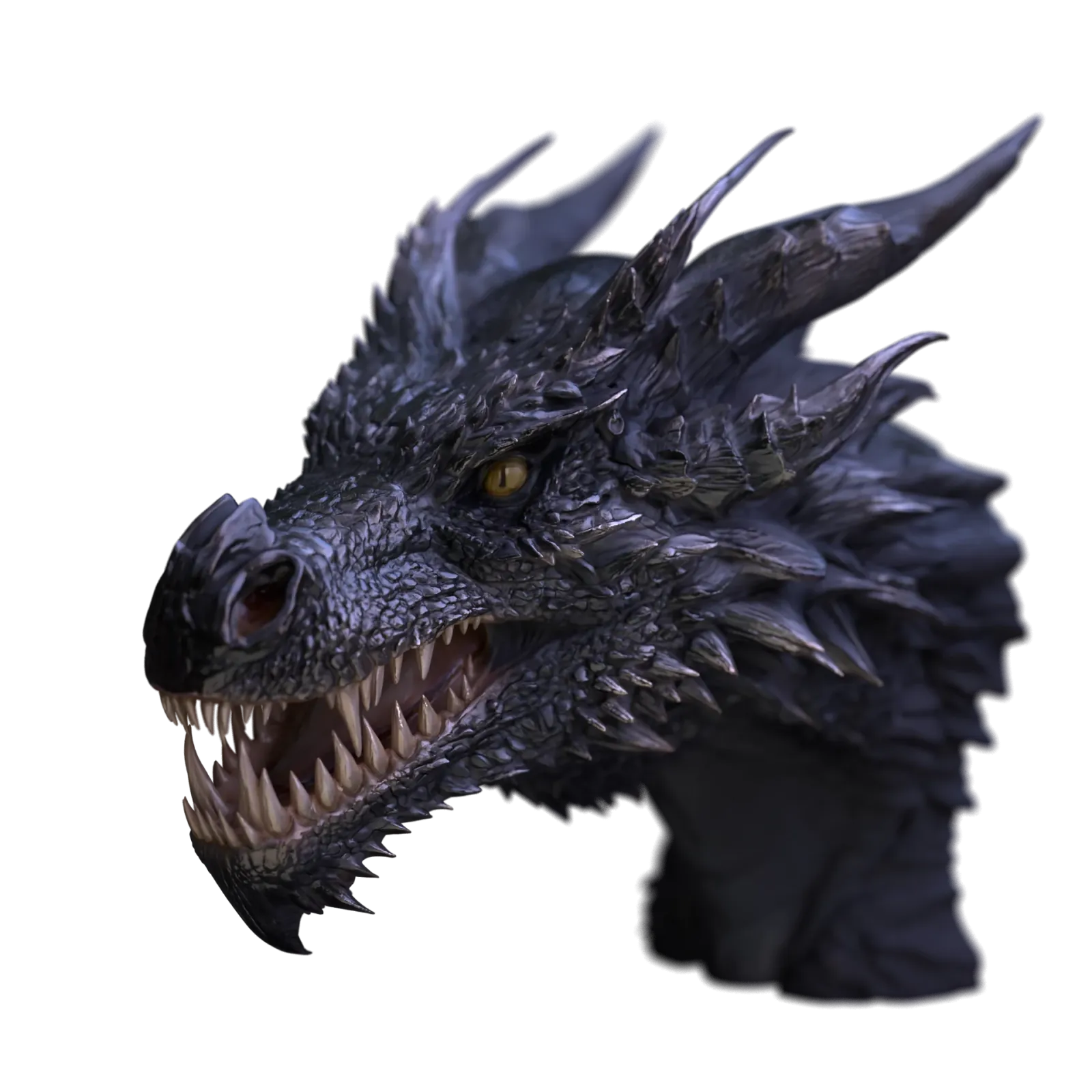
Image: Hyper3D Rodin (Deemos)
Written in our own words; quotes are marked and credited. How we report