Higgsfield laid out its process in a seven-post thread on X when it released the game, and in more detail in a 10-step blog post on its site by the user @adilinthewildtempo, linked from the thread. The steps below follow the thread, and every image and clip on this page comes from it. Saltfire is a showcase for Higgsfield's own products, posted the same day Higgsfield announced that Anthropic's Claude Fable 5.2 model was available on its platform. It is not an independent studio release.
Saltfire
- Web
Summary
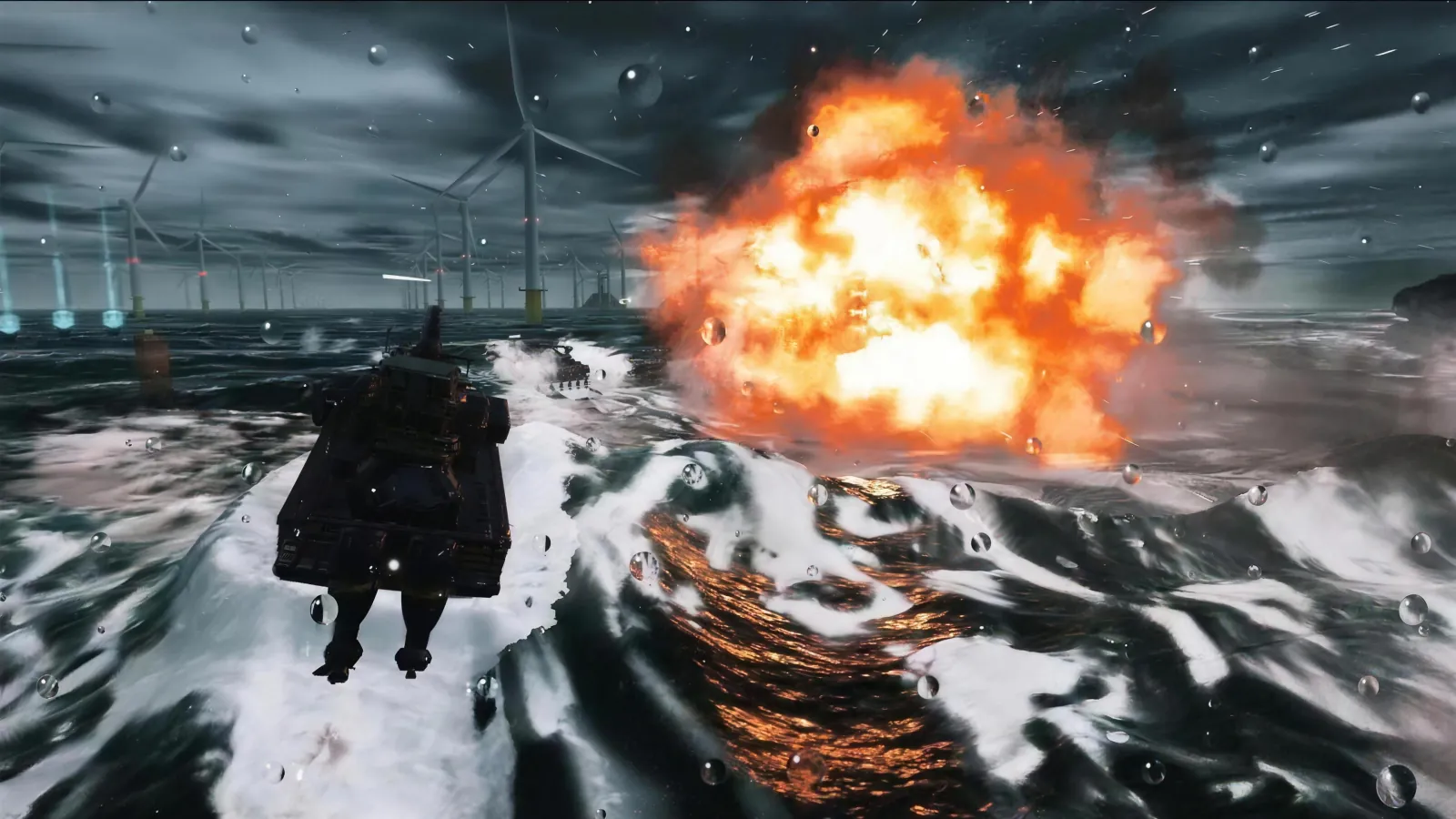
Saltfire is a free combat racing game that runs in the browser. You pilot an armed offshore powerboat against five computer-controlled rivals over three laps, firing machine guns, homing rockets and sea mines as you go. There are three hulls, four courses with their own weather and sea state, and four modes: Race, Time Trial, Championship and Last Afloat, an elimination mode. Higgsfield, the company behind an AI creative suite of image, video and 3D tools, released it on November 9, 2026, in a thread on X from its @higgsfield_ai account, and it plays at saltfire.higgsfield.app. A downloadable version packs the whole game into a single HTML file of about 27.8 MB that the company says runs offline.
Gameplay
How it was made
Step 1 Brief the agent, make the boats
According to Higgsfield, it connected its MCP to a coding agent and put the hulls, courses, modes and controls into a single brief. It generated a picture of each boat with Higgsfield's image models, then converted each one into a textured GLB model with image-to-3D. Finally it adjusted the materials so the boats hold up in close-ups and gave every hull its own handling.
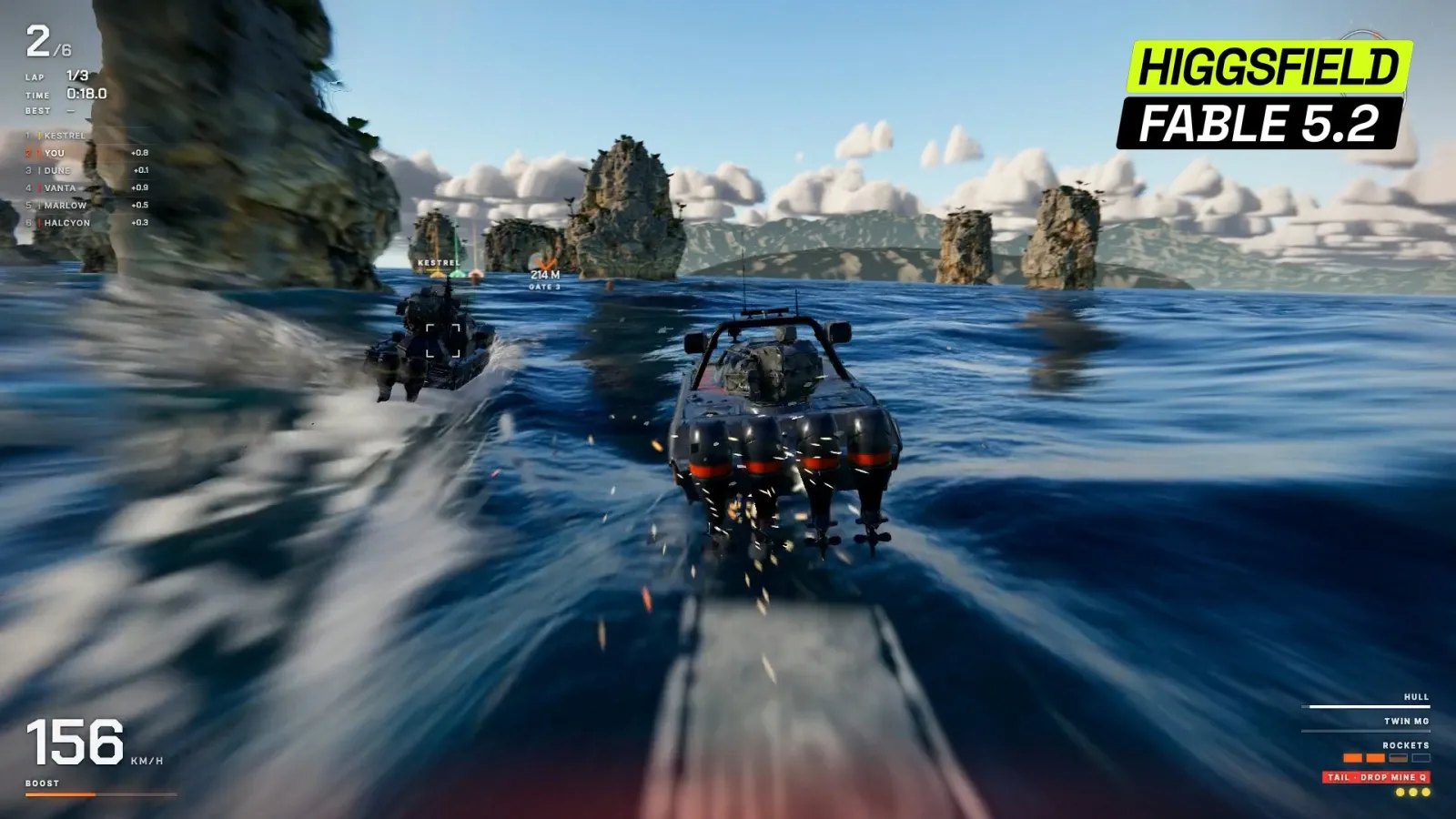
A dark armed powerboat with four outboard engines chasing a rival between limestone sea stacks, with the race position, lap, speed and weapons shown on screen Image: Higgsfield AI (@higgsfield_ai) on X Step 2 Build the sea
The ocean is a displaced mesh, and each course has its own sea state. On the High and Ultra settings, Higgsfield added FFT wave cascades, plus wakes and water that reacts where it meets each hull. The four courses run through rocky straits, a storm with five-metre waves, a sunset swell and a port at night.
Step 3 Add rivals, weapons and modes
Each race has five AI rivals, and the boats carry machine guns, homing rockets and mines. There are four modes: Race, Time Trial, Championship and Last Afloat. Whenever a boat is sunk, a kill-cam slows the action to a quarter of normal speed while the wreck burns and sinks.
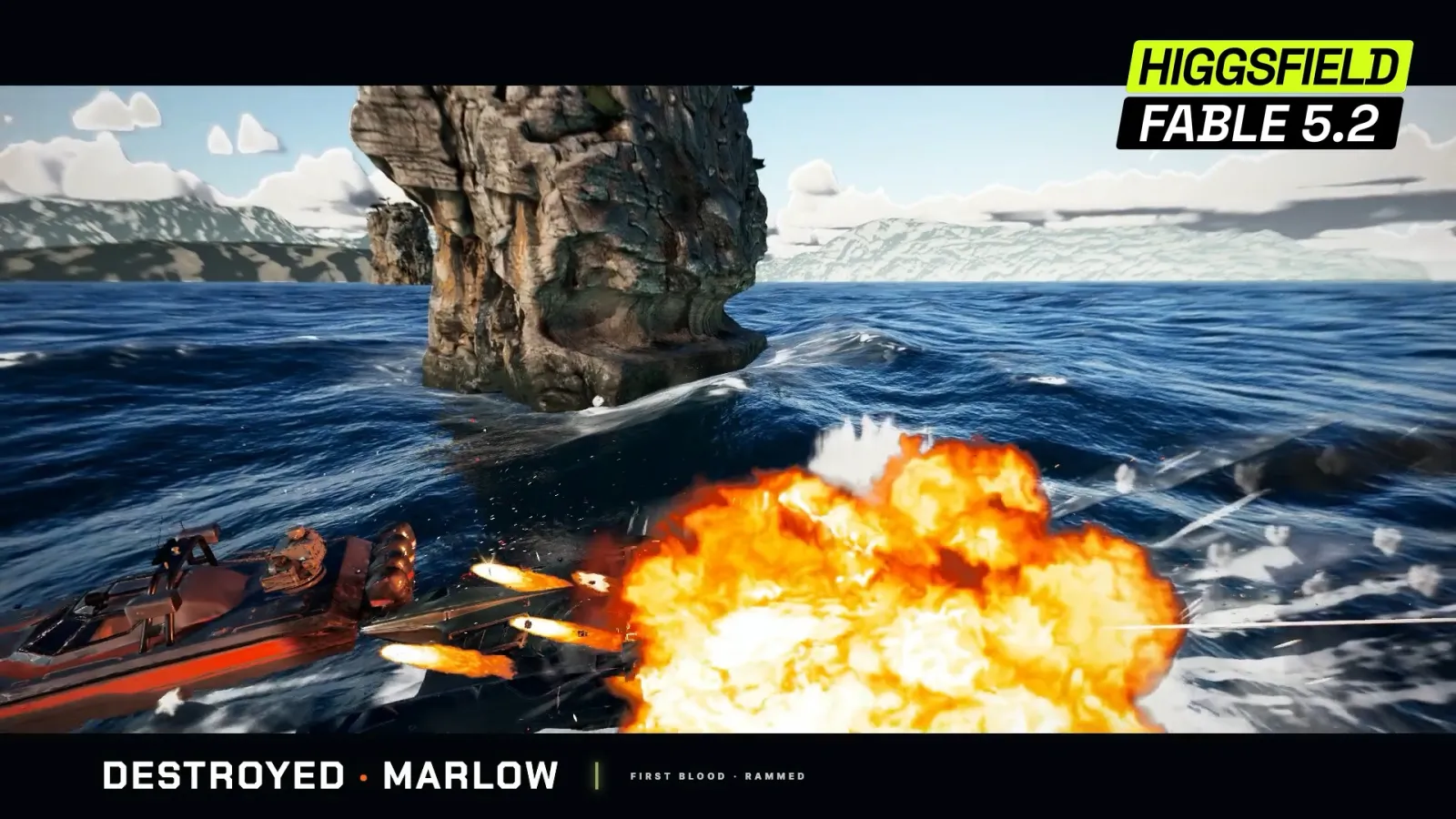
The kill-cam: a rival boat bursts into flames beside a sea stack, with the caption Destroyed · Marlow, First Blood · Rammed Image: Higgsfield AI (@higgsfield_ai) on X Step 4 Write the sound in code
The game has no audio files. Higgsfield says rain, thunder, clanking cranes and the music are all synthesized in Web Audio out of oscillators, filters and noise, and every course gets a different mix of sounds.
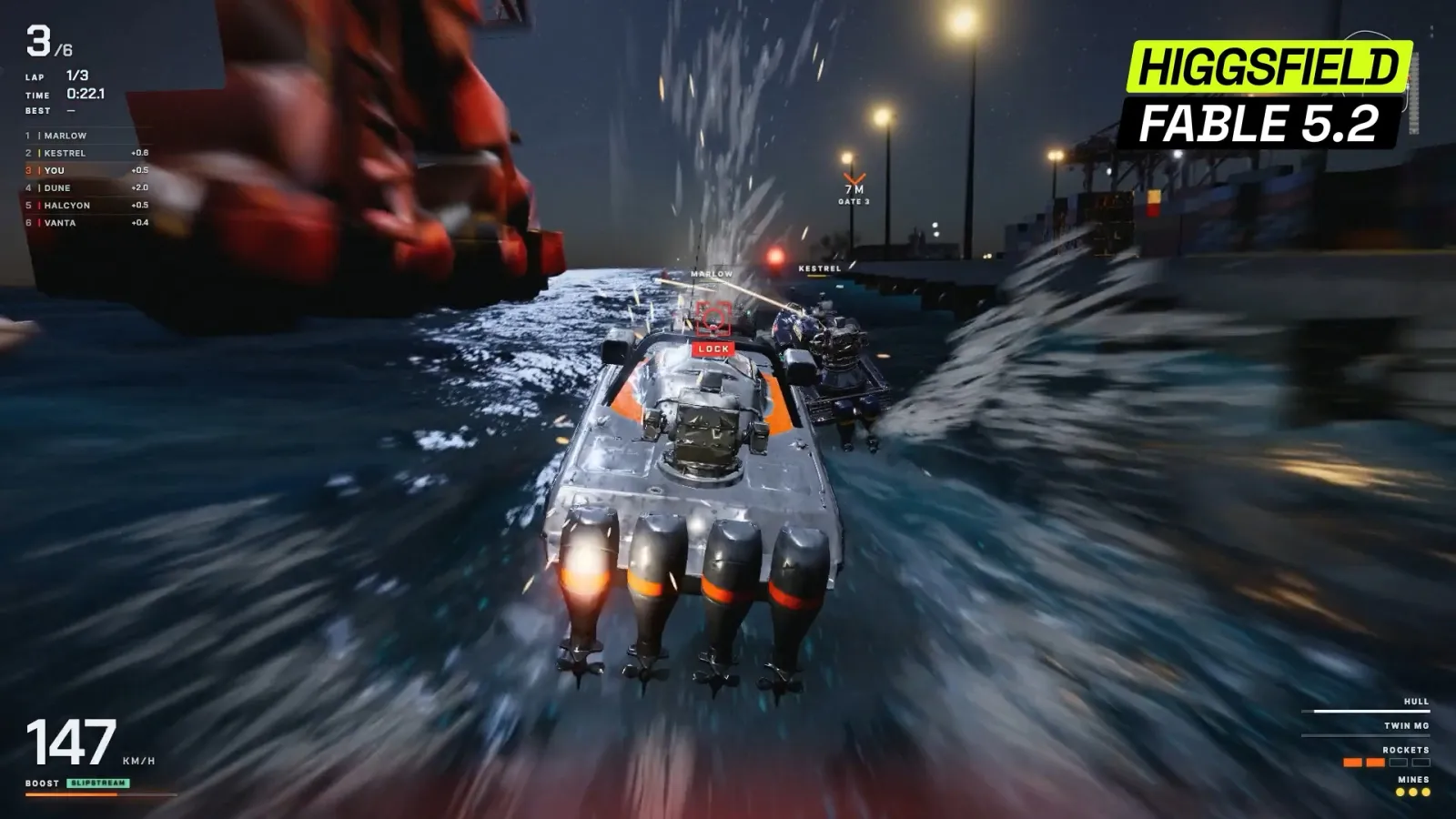
A night race through the port: the player's grey boat locks on to a rival under dockside lights and cranes Image: Higgsfield AI (@higgsfield_ai) on X Step 5 Test, render and publish
Higgsfield says it played every course, looking for broken geometry, flickering and effects that obscure the view. It then used Higgsfield GPU to render the trailer and the 4K stills, and published the game, which fits in a single 27.8 MB HTML file that also runs offline.
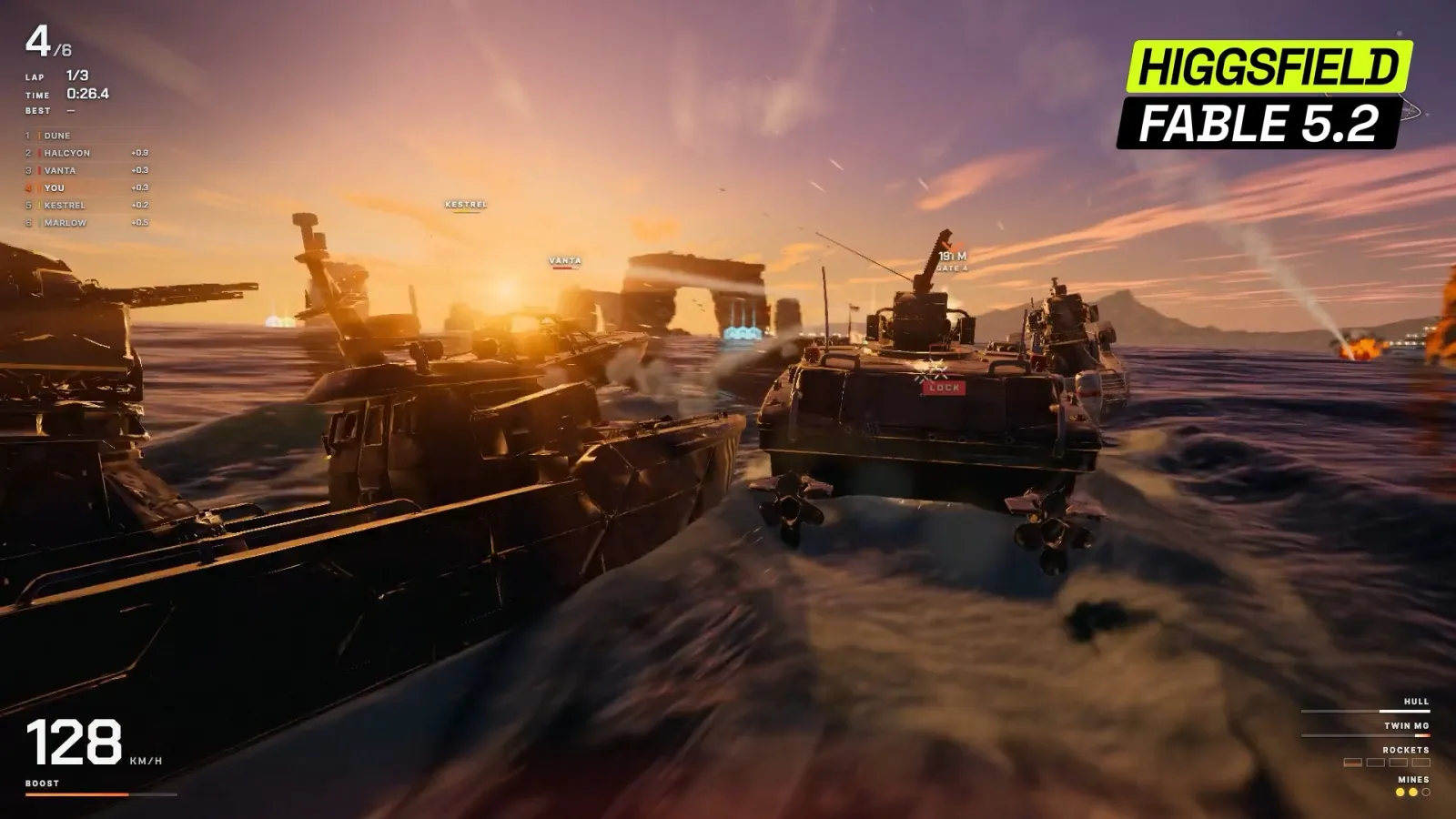
Boats racing toward a low sun and a sandstone arch, with a rival ahead locked on as a target Image: Higgsfield AI (@higgsfield_ai) on X
According to the thread and the blog, Claude Fable 5.2 wrote the game in three.js, working through a coding agent connected to Higgsfield by the company's MCP connector (MCP is a standard way to plug outside tools into an AI agent); the blog names Claude Code and the pi coding agent as examples. The blog says the AI-generated boats and large ships come in two bundles, 19 MB for the full set and 13.7 MB for a lighter one, and that the game's shaders correct typical flaws in the generated models, such as uneven normals and textures that blur up close. It also describes review rounds, labeled A to C, in which visual bugs such as broken hull fragments near the camera were fixed, with a note left in the code for each; we found such notes in the hosted game's source. Higgsfield GPU, where the 2:09 trailer and 4K stills were rendered, is the company's paid rendering service, and the blog says the finished file was published as an app in the Higgsfield community.
Caveat: these are Higgsfield's own claims about a demo that promotes its products. The company hasn't published a build time, cost, the actual prompts used on the day (the blog's prompts are labeled as examples) or the source code, and AIGamer only checked that the web version loads to its title screen and mode select (Race, Time Trial, Last Afloat, Championship); we haven't played a full race or run the offline file. We did confirm the play page, the 27.8 MB download, and that the hulls, courses and modes in the game's data match the blog.
Sources
Details come from the developer's own posts and pages credited below.
- Higgsfield AI (@higgsfield_ai) on X: Announcement and seven-post workflow thread, "We asked Fable 5.2 to build a racing game with no roads and very few rules", including the images and clip on this page (Higgsfield's own posts)
- Higgsfield (blog post by @adilinthewildtempo): How to Build a Browser Combat Racer Like Saltfire With Fable 5.2 and Higgsfield
- Higgsfield: Saltfire (play in the browser)
- Higgsfield: Saltfire offline build (single 27.8 MB HTML file)
- Higgsfield (@higgsfield) on X: Claude Fable 5.2 is live on Higgsfield
- Higgsfield: Higgsfield MCP
Image: Higgsfield AI (@higgsfield_ai) on X
Written in our own words; quotes are marked and credited. How we report