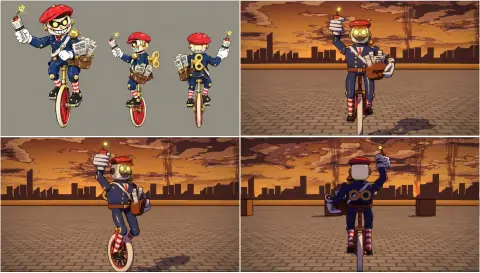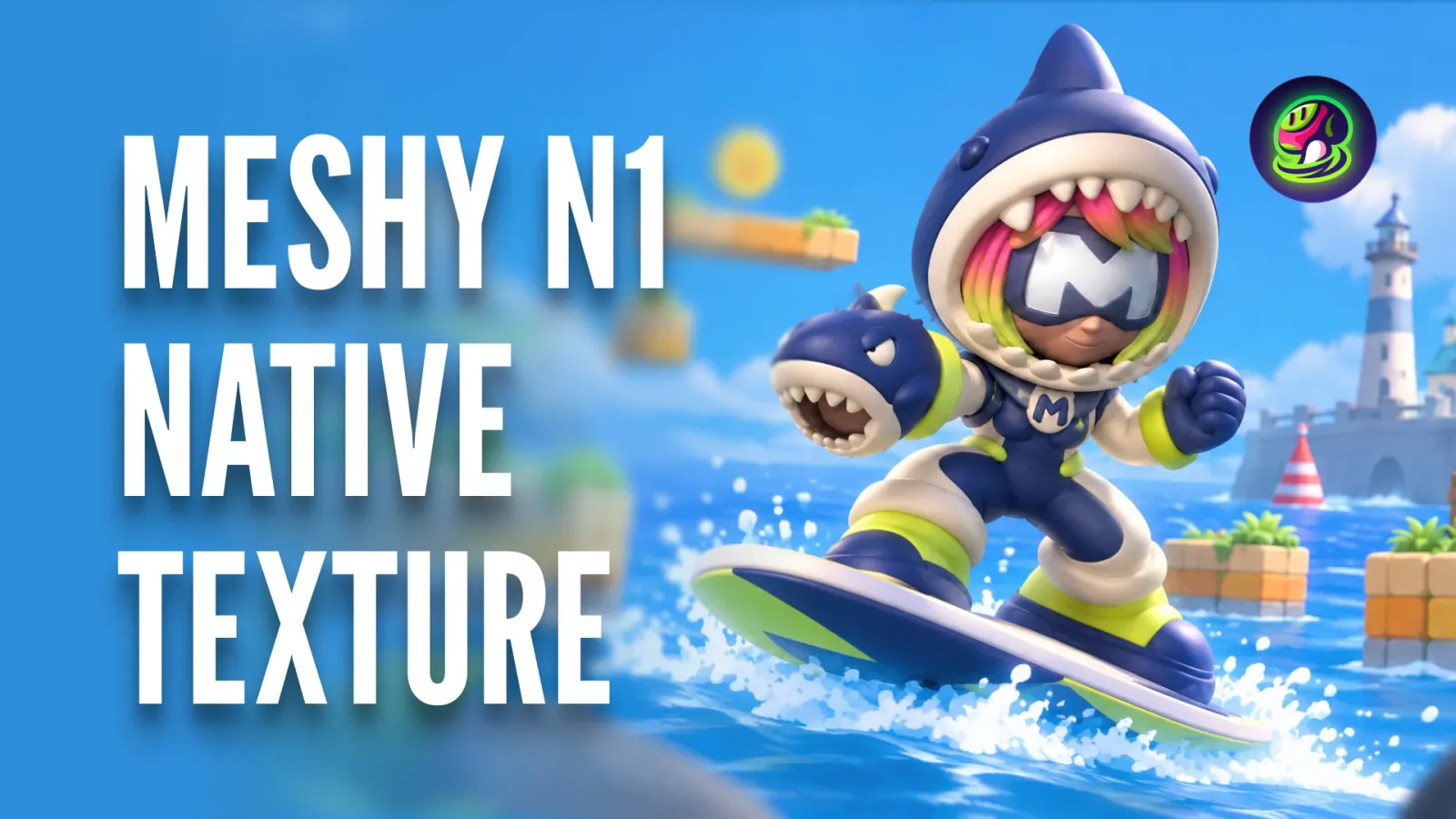
Meshy has released Meshy N1, its first model that textures a 3D mesh directly instead of projecting 2D images onto it. The company announced it on November 3, 2026, in a blog post by Andrew and on its @MeshyAI account on X, which said N1 was live in the Meshy web app and API.
Meshy's blog says Meshy 7, like most rival texturers, renders pictures of an object from several viewpoints and wraps them back over the shape. Where two pictures overlap and disagree, edges get drawn twice or a color spills onto the next part. N1 instead produces the color in 3D, which Meshy calls "native texturing".
Meshy's API docs list the limits: N1 outputs a single 2K base-color texture, guided by 1 to 4 reference images, with no PBR maps, no 4K or 8K and no text prompt. Lettering, patterns and faces look less sharp than with Meshy 7, which the docs pick for photorealism and PBR. The blog says any registered user can use N1, but texturing from several reference images is for subscribers only.
N1 is opt-in in the API: no default changed, per the docs and the changelog entries for November 2 and 3. A Retexture with N1 costs 10 credits, and a Smart Topology mesh plus N1 costs 15 on Image to 3D, per Meshy's API pricing. The docs pair N1 with Meshy T2.5 for characters and Meshy T2 for batches of props.
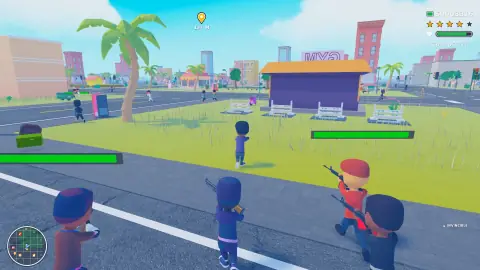
Why it matters: Players see game assets from all sides and up close, where seams show. Meshy's docs recommend N1 for stylized and low-poly game assets, and a Meshy cookbook recipe by Serafin Sanchez notes that unlit and toon-shaded games read only the base color, so they lose nothing without PBR maps. Assets needing PBR or textures above 2K stay on Meshy 7. AIGamer's Meshy directory entry is at https://www.aigamer.gg/tools/meshy.
Caveat: The benchmark figures are Meshy's own, from its stylized game-asset test set; AIGamer hasn't tested N1. On a low-poly Meshy T2.5 mesh, Meshy reports a Texture Cleanliness score (a metric it created; higher means fewer doubled color edges) of 77% for N1, against 47% to 59% for Hi3D 3.0, Tripo 3.5 and Rodin 2.5, and a median texturing time of 14 seconds against 68 to 237 seconds.
The blog says the cleanliness benchmark will be added to Meshy's meshybench repository on GitHub; as of November 12, it hasn't been.