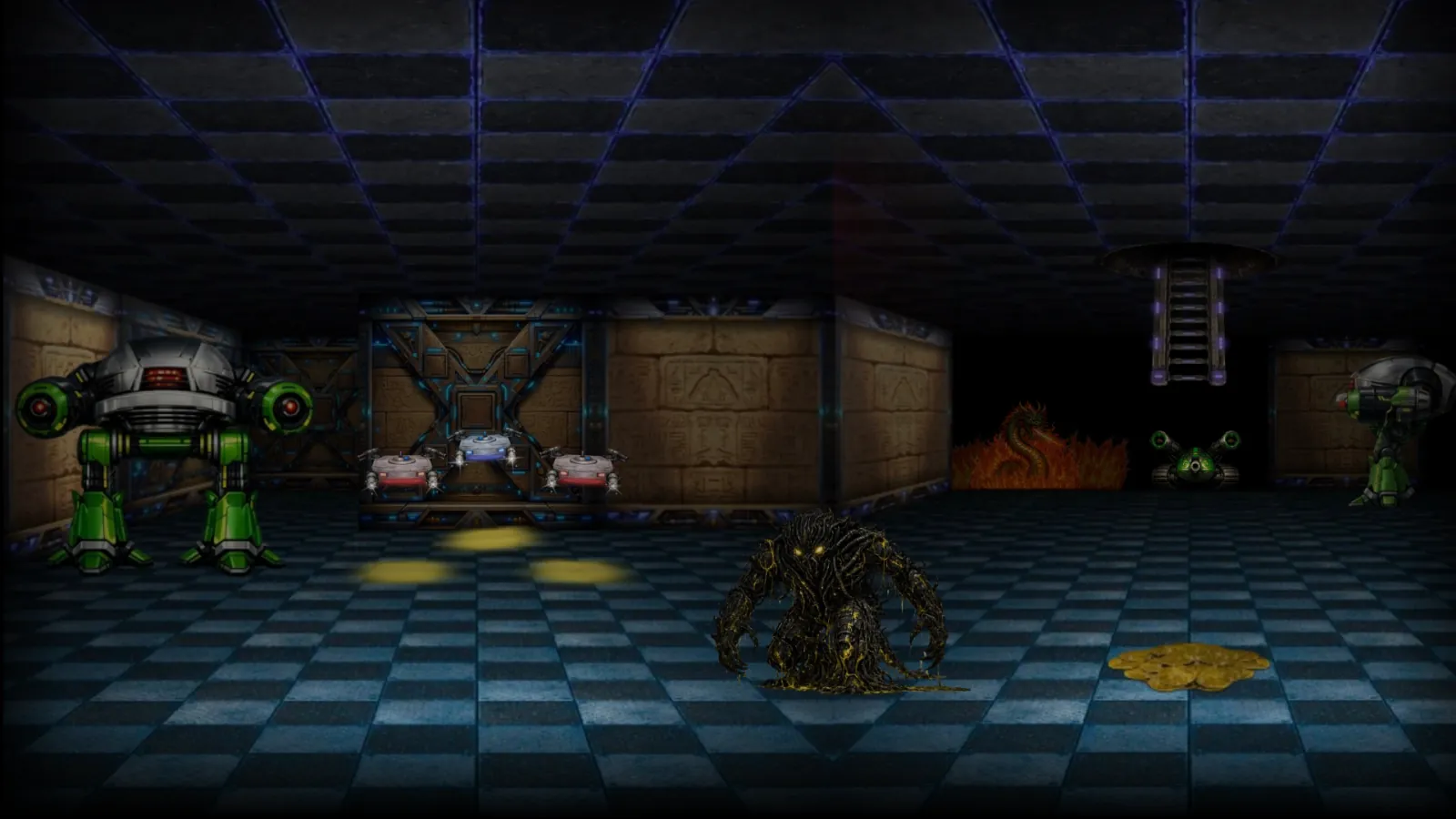
How it was made: details come from the developer. The Steam store's AI disclosure says only that the game includes AI-made and handcrafted artwork and audio. In an interview with Vibe1Up published November 7, 2026, Twin said the first 2,000 lines of code were written in ChatGPT about a year ago, before he moved to Cursor, mainly with Claude Opus. The game is now about 100,000 lines of JavaScript, he said, with music made in Suno, graphics in ChatGPT and OpenArt, and Grok Bot used for marketing and outreach. The official press kit says it runs on Twin's own custom engine, with no commercial game engine.
Vibe1Up also quotes Twin's development notes, with his permission, and lists a slightly longer toolchain drawn from them: Claude for the story, ChatGPT and Grok for art, OpenArt for animation, PowerPoint and Canva to angle flat wall images into faux-3D, Suno and Audacity for music and sound effects, and Cursor with Claude and Grok models for code. In the notes, Twin says he kept about one music track out of every 10 to 20 he generated, and logged every code change in a separate "Dev Notes" document so he could re-brief AI agents after they lost context. He told Vibe1Up the game took hundreds of hours of spare-time work over a year and used a large amount of AI credits, adding that "it's a myth that anyone can 'one prompt' a commercially viable game."