Shikhar, who also made the ink-wash adventure Sumiro (https://www.aigamer.gg/games/sumiro), says he built Papertrails with Claude's Fable 5.2 and Opus 5.5 models and three.js. His seven-post launch thread on X shares the full prompt and workflow; the steps below follow it, and every step image comes from it.
Papertrails
- Web browser
Summary
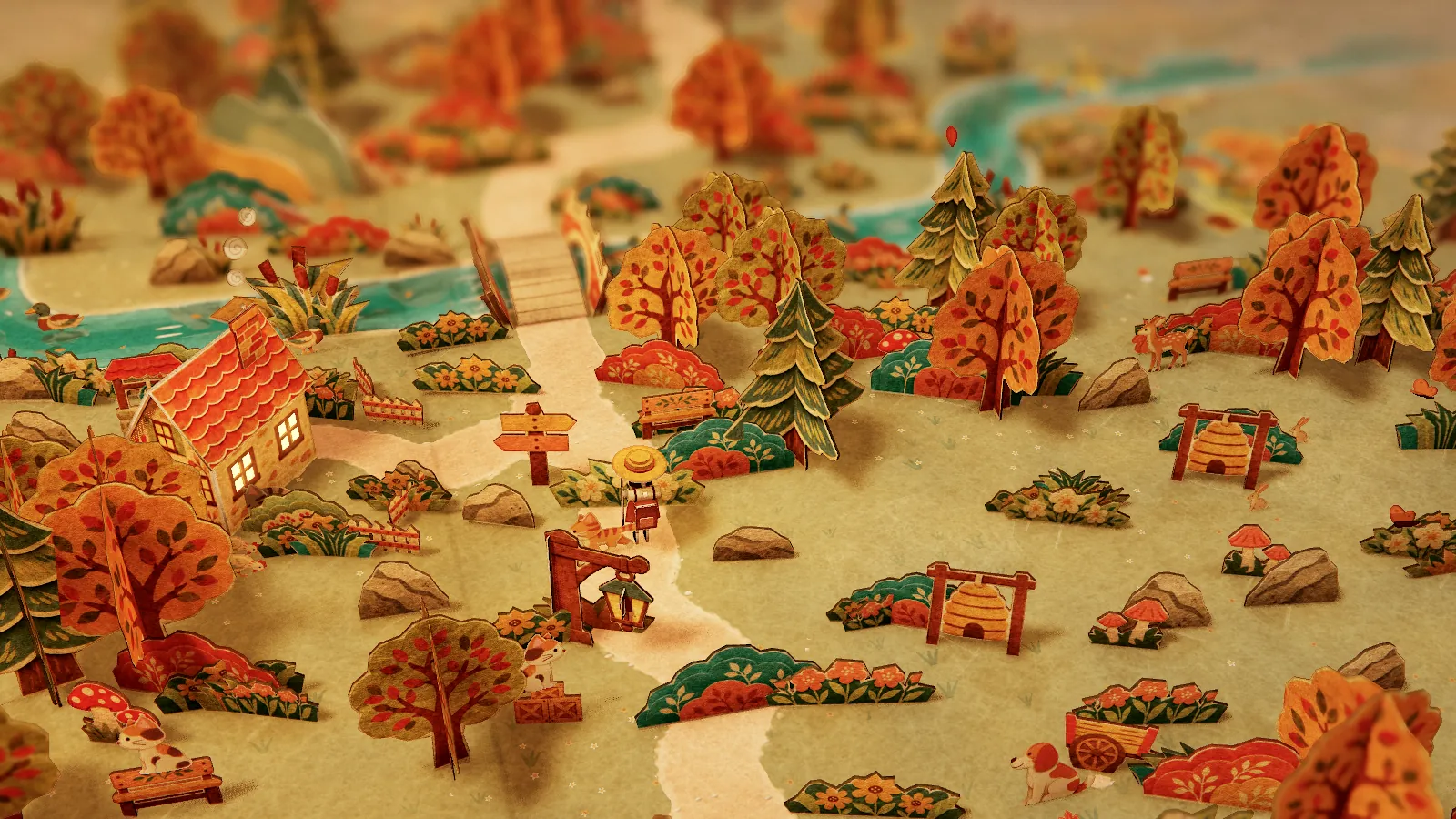
Papertrails is a free 3D exploration game that runs in a web browser. A small paper traveler in a straw hat crosses an endless pop-up book, and hinged cards of trees, houses, hills and bridges spring up from the page around him as he walks, through desert, snow, blossom and pine forest, by day or night. Its source code adds small goals: paper scraps to pick up, lanterns that light as he passes, and a map page. Its developer, Shikhar (@xikhar) on X, released it on November 17, 2026, calling it "an endless papercraft world that pops up around you."
Gameplay
How it was made
Step 1 Write one detailed prompt
Shikhar started with a single long prompt for a project then called Pop-up Atlas: a three.js walking toy where hinged paper tiles spring up ahead of a tiny traveler and fold flat behind him. It also set the tools and rules: no questions, one subagent per component, and a running log.
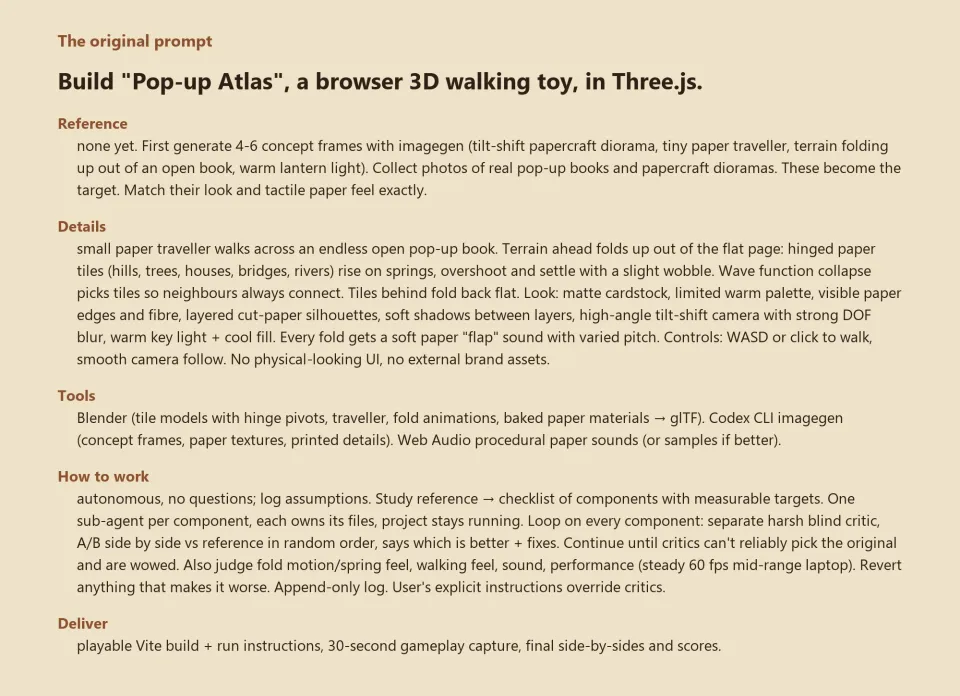
The original prompt, covering reference, details, tools, how to work and what to deliver Image: Shikhar (@xikhar) on X Step 2 Generate and measure references
The agent's first job was a target to aim at: concept frames from GPT Image of a paper world opening out of a book, plus photos of real pop-up books. It then turned those references into numbers, measuring palette, edge and lighting values to match.
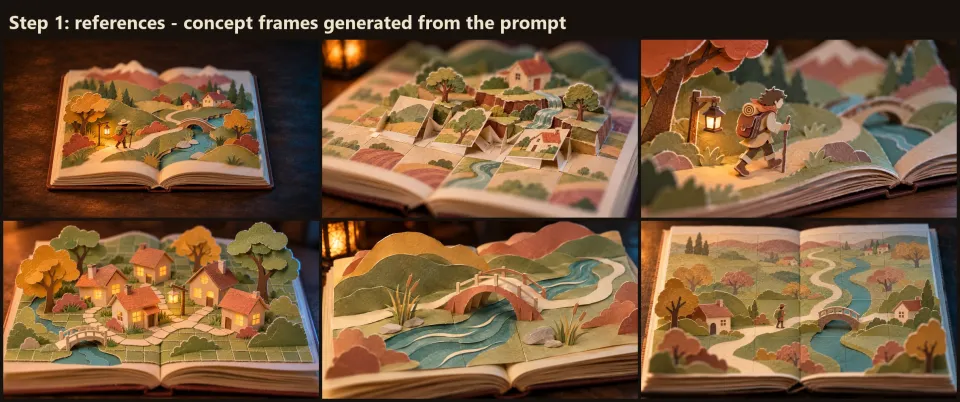
Six concept frames of a papercraft world folding out of an open book Image: Shikhar (@xikhar) on X 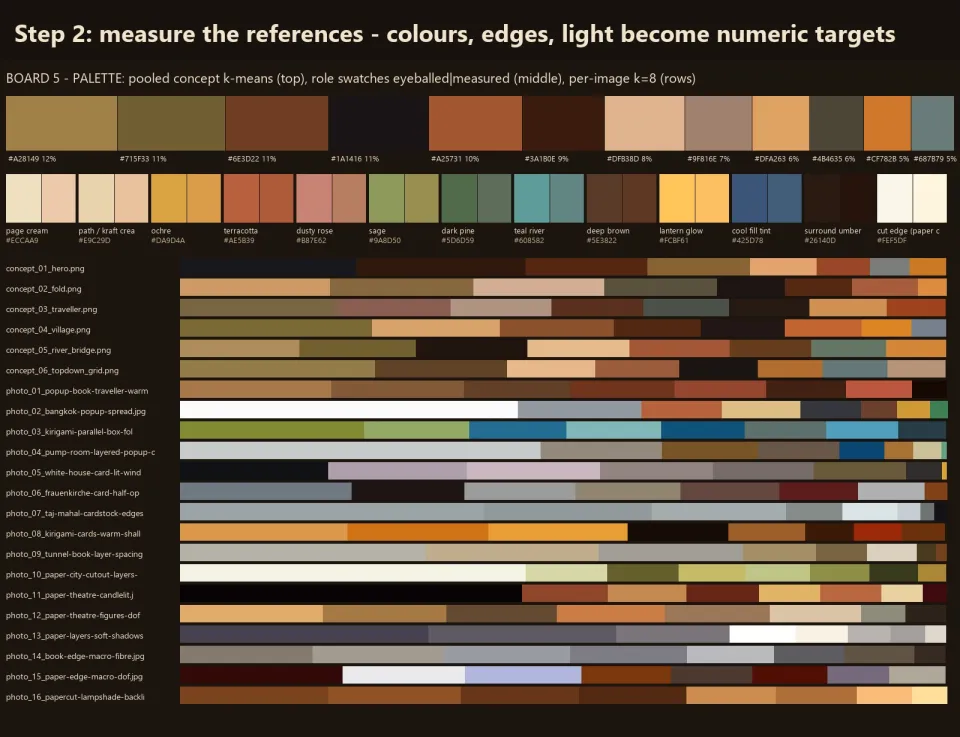
Color palettes measured from the concept frames and reference photos Image: Shikhar (@xikhar) on X Step 3 Build with one agent per part
Each component was handed to its own subagent. Separate critics then judged each build blind, setting it beside the reference in random order, picking the better one and listing fixes.
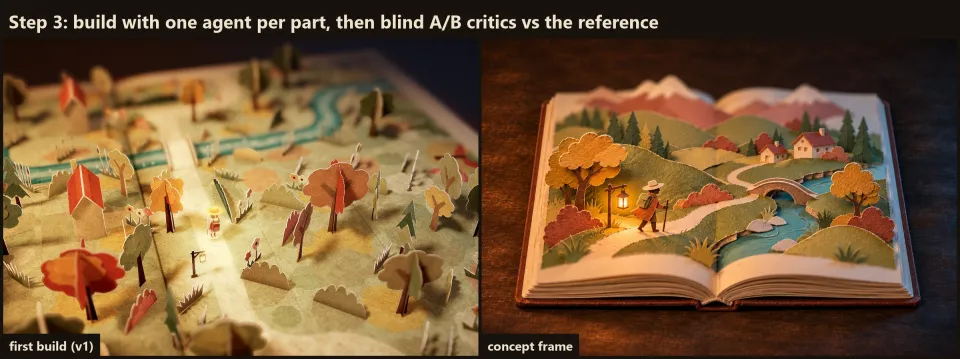
The first in-game build beside the concept frame it was judged against Image: Shikhar (@xikhar) on X Step 4 Print the art onto paper cards
The game's printed artwork, from trees and houses to fences and market stalls, came out of a single generated sprite sheet. Those pieces were then mounted on hinged paper cards that fold up in the world.
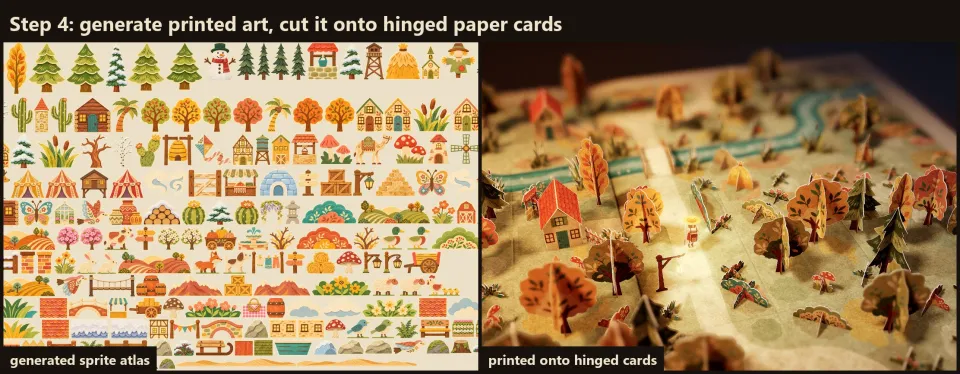
The generated sprite sheet and the same art on hinged cards in the game Image: Shikhar (@xikhar) on X Step 5 Add biomes and weather
Working from a few style guides, GPT Image produced 15 new biome and weather references; his image notes that 19 were made and 4 thrown out. In the game they turned into desert, snow, blossom and pinewood areas, each with a day and a night look.
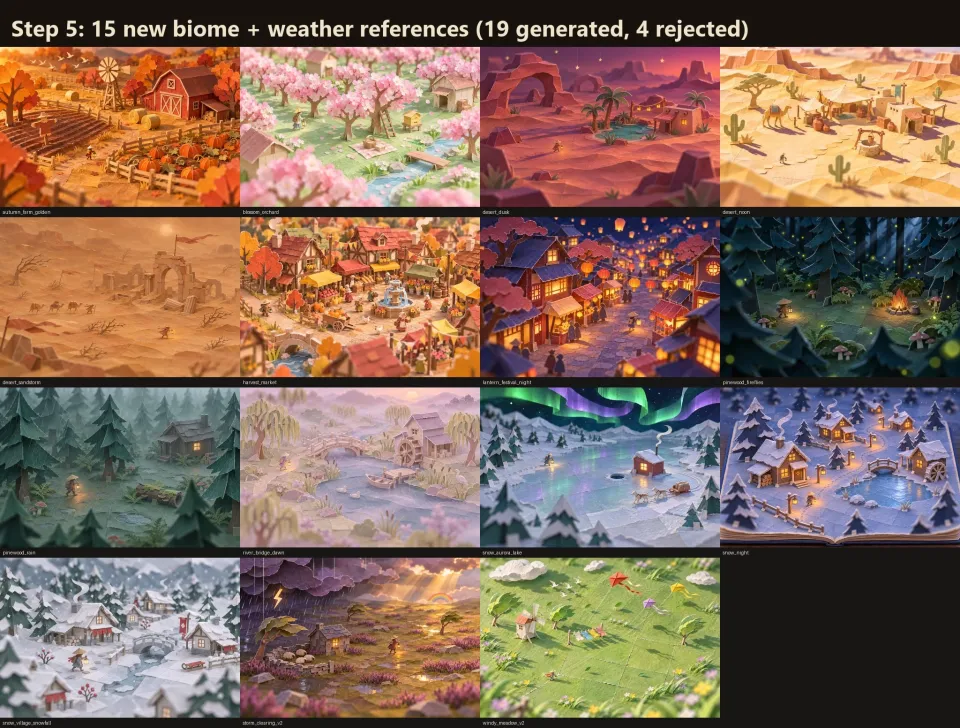
Fifteen generated biome and weather reference images Image: Shikhar (@xikhar) on X 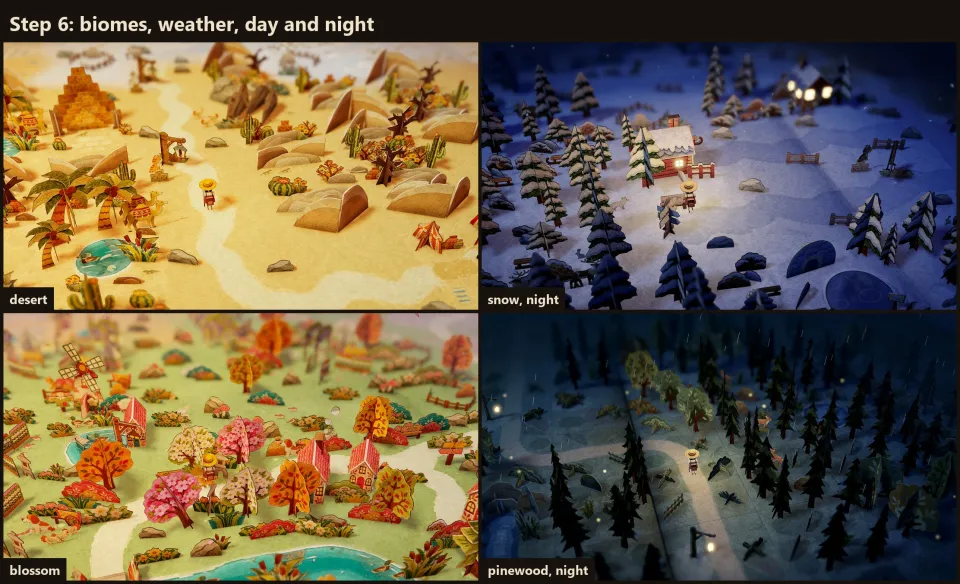
Desert, snow at night, blossom and pinewood at night in the game Image: Shikhar (@xikhar) on X Step 6 Set one gold-standard image
He chose a single image as the style to hit. The agent fed it game screenshots and produced a target in that style for every biome, and the animals were designed from a screenshot in the same way.
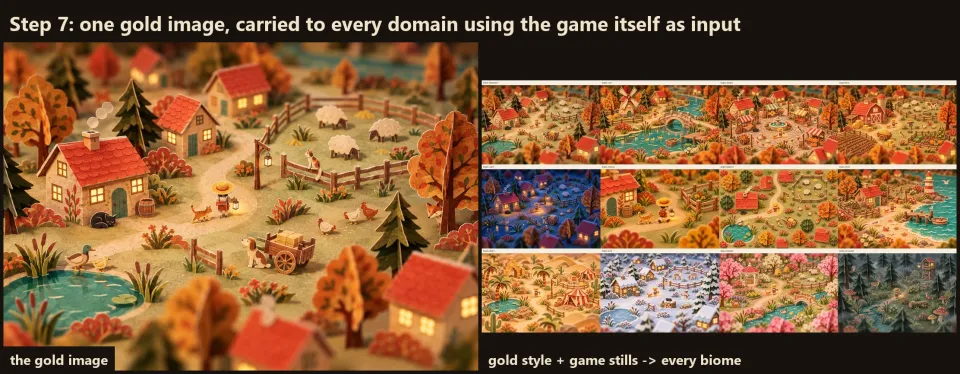
The chosen style image and the targets made from it for each biome Image: Shikhar (@xikhar) on X 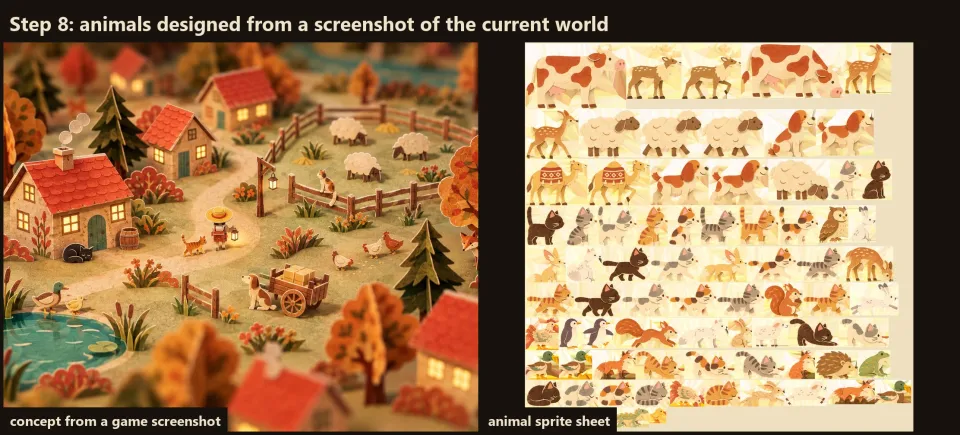
An animal concept made from a game screenshot and the resulting animal sprite sheet Image: Shikhar (@xikhar) on X Step 7 Render, compare, fix, repeat
The last stage was a loop of rendering a shot, checking it against the target, critiquing the result and applying fixes. His final image tracks one camera view through each pass, from the first build to the current game beside the target.
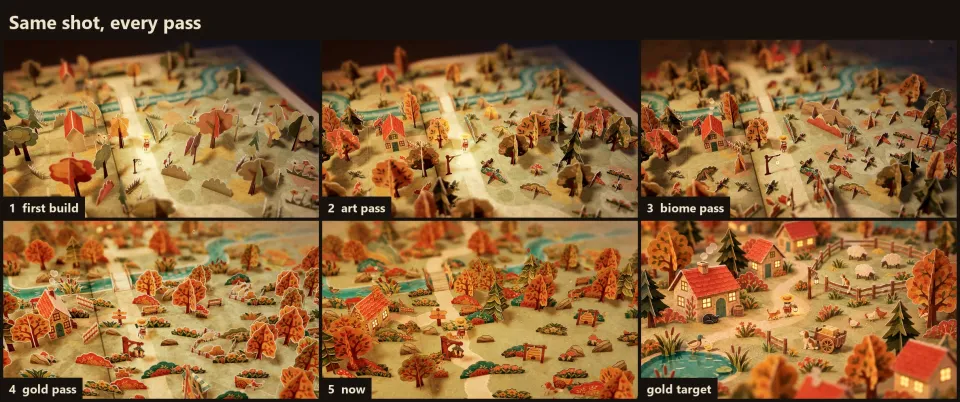
The same shot after each pass: first build, art, biome and gold passes, the current game and the target Image: Shikhar (@xikhar) on X
The code is open source under the MIT license on GitHub (https://github.com/xikhar/papertrails), where the project had 241 stars on November 26; the launch post had been viewed nearly 189,000 times by then. Walk with WASD or a click; N switches to night. Details of how it was made come from the developer's own posts.
Sources
Details come from the developer's own posts and pages credited below.
- Shikhar (@xikhar) on X: Launch post with gameplay video, and the seven-post thread with the prompt and workflow images used on this page (developer's own posts)
- Papertrails: The game's free web build (play link)
- xikhar/papertrails on GitHub: Source code, MIT license, README screenshots (the header image) and commit history
Image: Shikhar (@xikhar) / Papertrails on GitHub
Written in our own words; quotes are marked and credited. How we report