Guide
How to turn a mobile game ad into a real, playable web game
Treat the ad as a design brief, write down every mechanic, make the game losable and let a coding agent build and screenshot it. A worked example, a prompt outline and the copyright lines not to cross.
Key points
- Write the ad down as a spec before prompting: what's on screen, which numbers change and what a player does at each moment.
- Make "you can lose" a hard requirement; real collisions, real squad counts and a fail screen are what separate a game from a replay of the ad.
- Rebuild the mechanic, not the brand: use an original name, characters and look, and keep the ad footage out of anything you ship.
You have seen the so-called fake ads: a squad of soldiers runs down a bridge, picks up "+1" gates, frees a hero from a cage and melts a boss, and the game you install often plays differently. A coding agent can build the game the ad shows. The method: treat the ad as a design brief, write down every mechanic you can see, insist that the player can lose, and make the agent check its own work with screenshots. Then give the result its own name and look. This guide walks through one shipped example, a prompt outline and the copyright lines to stay behind.
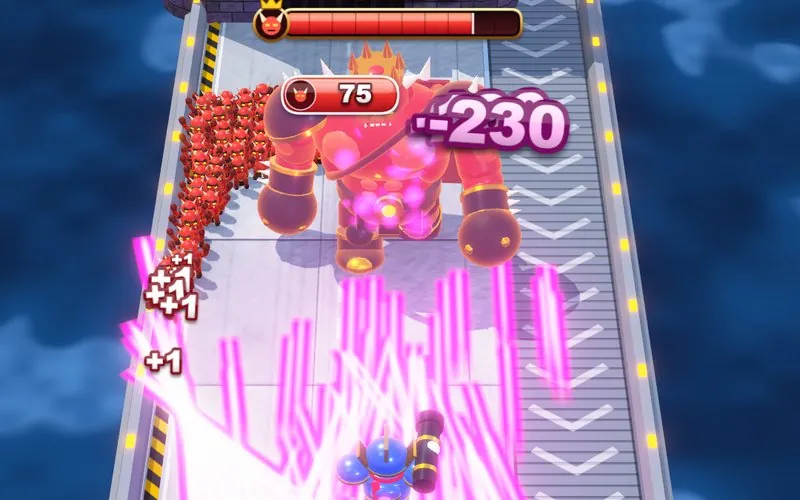 Bridge Squad, a browser game built from a mobile ad with Fable 5.2. Image: noclipepe (@noclipepe) on X
The worked example: Bridge Squad
On November 16, 2026, noclipepe (@noclipepe) posted a split-screen video on X: a mobile ad on the left and, on the right, a browser game built from it by the Fable 5.2 model. In the post, noclipepe said the build took 1 hour 10 minutes, came to 2,980 lines of code and cost $29.52. Those figures are the creator's own; AIGamer has not re-run the build or seen the bill.
The post listed how each beat of the ad became a working rule: "+1" gates add real soldiers, the caged hero is shot free, an "ATK+150%" pickup switches the squad to pink lasers, and the boss gets a real health bar. After followers asked to play it, noclipepe put the game online on November 17 as Bridge Squad. A second level, built from a second ad, followed on November 18; for that one noclipepe reported 1 hour 18 minutes, 2,588 lines and $32.16.
When AIGamer checked the live page on November 24, 2026, Bridge Squad was a single HTML page with two stages ("The Bridge" and "Flood Rescue"). Its main game script ran to 2,506 lines, and the page loaded one local file, a 608 KB minified copy of the Three.js library (MIT license). We found no image or sound files: models, textures and sounds are generated in code. It also exposes a small window.__game object that reports the game's state. The posted line counts don't match today's two-stage file; noclipepe hasn't said how the code changed.
noclipepe's site also publishes both prompts in full (Level 1, Level 2). Read them at the source; the steps below draw on their ideas, with our own advice added, especially on originality.
Before you start: what you can and can't copy
This matters more than the prompt. What follows is general information about US copyright, not legal advice; rules differ by country, and if you plan to sell the result, talk to a lawyer.
- Rebuild the mechanic, not the brand. The U.S. Copyright Office's Circular 33 says copyright doesn't cover ideas, systems or methods of operation, only the original way they are expressed. That is why game rules, such as gates that change your unit count or a cage you shoot to free a hero, are generally seen as unprotected, while a specific game's art, character designs, music, text and code can be protected. The same circular notes that names and titles aren't covered by copyright but can be protected as trademarks, so a game's name and logo are off limits too.
- Give your game an original name, characters and look. Bridge Squad has its own title and code-made art. noclipepe's prompts tell the agent to match the ad's look as closely as it can, because the goal was a side-by-side comparison video. If you plan to publish your game, don't follow that part: pick your own palette, character designs, setting and title so nothing reads as the advertised game or its characters.
- Keep the ad out of the build. Use the clip and stills as private reference only. Don't put frames, sounds, logos or on-screen text from the ad into the game, and check the terms of whatever site you got the clip from before downloading it. Posting the ad beside your game in a comparison video carries its own risks.
- Be careful with "fake". Some of these ads show gameplay that does exist in some form: two replies to noclipepe's post on X said games with this gameplay exist. Describe what you built, not someone else's business.
What you need
- A short ad clip (noclipepe's prompts describe a 26-second ad for Level 1 and a 44-second one for Level 2), or a handful of stills.
- A coding agent that can run code and take screenshots, such as Claude Code, Codex, Cursor or Gemini CLI. Bridge Squad was built with Fable 5.2; other agents can follow the same brief, but expect different results.
- A browser stack the agent can serve locally. Plain JavaScript in one
index.html, plus Three.js for 3D, is enough for this kind of game. A 2D canvas works if the ad is flat. - ffmpeg (optional) to turn the clip into a contact sheet.
Step by step
1. Pick an ad with a complete loop
Choose an ad that shows a whole loop: a start, a way to grow or choose, a mid-level beat (a cage, a power-up, a hazard) and an end (a boss or a fail). Skip mostly cinematic ads. Short is better: each of Bridge Squad's prompts asks for a level of well under a minute.
2. Make a contact sheet
Agents read one image far more reliably than they watch a video. A one-frame-per-second grid is a good start:
ffmpeg -i ad.mp4 -vf "fps=1,scale=240:-1,tile=6x5" -frames:v 1 sheet.jpg
That packs the first 30 seconds into a single 6-by-5 sheet; for a longer ad, use a bigger grid or a second sheet. noclipepe gave the agent both the clip and a sheet of its frames and told it to study them before writing code.
3. Write down what the ad shows, beat by beat
This is your spec, and it does most of the work. For every moment, note three things: what's on screen, what the player does and which number changes. Cover the camera and framing, the player's units, every gate or pickup and its effect, the enemies and boss, and the on-screen counters. noclipepe's prompts do this in detail, down to which side of the bridge the gates sit on and how their values change further along.
Be concrete. "A gate" is vague; "blue gates on the right add one unit each, gold gates further on add 50" is something an agent can build and you can test. Describe mechanics and layout, not the ad's characters: write "a heavy melee boss with a health bar", not the name or outfit of a character from the advertised game.
4. Make losing a hard requirement
The ad is a recording; your game isn't. Spell out that every number has to come from the simulation: a gate counts only when the squad actually passes through it, the squad counter is the real number of units, and enemies and bosses lose health only when projectiles hit them. Then define how the player loses, with a fail screen and a retry, and require that both a win and a loss are reachable. noclipepe's Level 1 prompt puts the point in one line: "The ad fakes it; you must not."
Add fail states the ad never shows. The Level 2 prompt, for example, says the trapped hero is lost if his tank fills with water before the squad frees him, which turns a background animation into a timer the player has to beat.
5. Constrain the build
Tight limits keep a one-shot build manageable. The ones that matter most for this kind of game:
- One file, no framework: a single
index.htmlin plain JavaScript, with Three.js saved next to it and loaded as a local file rather than pasted in. - No outside assets: models, effects and sound all generated in code, so there is nothing to license and nothing to go missing.
- Performance: instanced meshes, so hundreds of units stay smooth on a phone.
- Recording and testing controls: a start screen, a restart key, a mute button and a key that hides the interface.
noclipepe's prompts ask for all of these. The shipped game adds a quality toggle and a stage picker. If your goal is a game rather than a comparison video, add one more limit: an original title and character design, with no logos, characters or text taken from the ad.
6. Define "done" and ask for proof
End the prompt with a checklist the agent must meet and report on: a target run length (noclipepe asked for about 25 to 40 seconds for Level 1 and 30 to 45 for Level 2), evidence that winning and losing both work, how long the build took, what it couldn't recreate, and screenshots of named moments such as the start, the first gates, the power-up and the boss fight.
Named screenshots force the agent to run the game and look at it, and give you something to compare against your contact sheet.
7. Play it, then fix one rule at a time
Play the build yourself on a phone and on a desktop, then check the things agents most often fake:
- Do gates change the real unit count, or only the label?
- Can you miss the gates, arrive too small and lose?
- Does the boss's health go down from hits, and can the boss win?
- Does restart work after both a win and a loss?
- Does anything still look like the advertised game's characters, title or logo?
Ask the agent to expose a state object like window.__game (squad size, boss health, phase) so it can read the game while it plays. Fix one broken rule per prompt, and polish only once the loop holds. Our guide on letting coding agents playtest the games they build covers the tools for that loop in more depth.
8. Ship it as a static page
A one-file web game needs no server. Bridge Squad is hosted on Cloudflare Pages (its address ends in pages.dev); any static host that serves the HTML and the library file works.
A prompt outline you can adapt
noclipepe's prompts are public, so read them for a full example. This shorter outline is ours; it adds the originality rules and the state object:
Goal: build a real, playable browser game from the ad in this folder
(ad.mp4, sheet.jpg). Use the ad for mechanics only: original name,
characters, colors and setting; no logos, characters or text from it.

What the ad shows: [camera, player, each gate or pickup and what it
does, enemies, boss, the numbers that change].

The game must be real: [what the player controls; every number comes
from game logic; the fail condition; a retry screen; win and loss
must both be possible].

Build constraints: one index.html, plain JS, local three.js, all
models and sounds made in code, phone and desktop controls, R
restarts, a mute button. Expose window.__game with the key state.

Done means: [run length]; screenshots of [named moments]; tell me
what you could not build and how long it took.
Going further
- More levels from one engine. Once the loop holds, add data (gate layouts, enemy waves, themes) rather than rewriting the renderer. A community project, bridge-squad-levels by thedjpetersen, shows one approach: its README says it downloads the original Bridge Squad page and patches it locally with seeded levels, new weapons, gate types and enemies, instead of rehosting the game's code.
- Skills that formalize the method. video-to-game (MIT) is an agent skill that treats a short generated gameplay video as the design document, from contact sheet and spec to a Three.js game the agent plays through
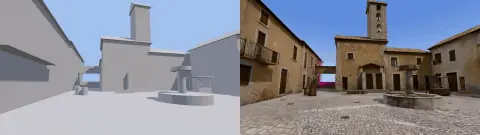
window.__game. reference-to-game (MIT) turns images, videos or sketches into a playable game in the reference's style. Both aim to match the reference's look, so apply the copyright rules above if your reference is someone else's game. - New to building games this way? Start with our guide to vibe coding games, or compare tools in Best AI game makers in 2026.
Limits and caveats
- The costs and times are one creator's reports from single runs, and AIGamer hasn't checked them.
- One prompt rarely finishes the job. One reply to noclipepe's post said a similar attempt with another model came out disappointing. Plan on a few rounds of playtesting and fixes.
- Close copies carry risk even when the mechanics are fair game; an original name, cast and look are safer.
FAQ
Is it legal to make a game from a mobile game ad?
In the US, copyright doesn't protect game mechanics as such, since ideas and methods of operation are excluded, but a game's art, characters, music, text and code can be protected, and its name and logo can be protected as trademarks. Recreating a general mechanic is therefore lower risk than copying how a specific game looks. Give your game an original name and look, keep the ad's footage and sound out of it, and get legal advice before selling it. This guide isn't legal advice.
How much does it cost to build one?
noclipepe reported $29.52 for Bridge Squad's first level and $32.16 for the second, using Fable 5.2. Those are the creator's own figures from single runs; costs vary a lot by model and by how many fix-up rounds you need.
Which coding agent should I use?
Any agent that can write files, run a local server and take screenshots can follow this method; Bridge Squad was built with Fable 5.2. Judge an agent by whether its build passes your losability checks, not by the first screenshot.
Do I need Three.js?
No. Bridge Squad uses Three.js because the ad is 3D. A flat ad can be rebuilt on a plain 2D canvas, which is simpler for an agent to get right.
Sources
Compiled by AIGamer from the sources below, which we last checked on 24 November 2026. Prices and features change; check the tool's own site before you buy.
- noclipepe (@noclipepe) on X: Fable 5.2 finally built the game from those fake mobile ads (post with video, November 16, 2026)
- noclipepe (@noclipepe) on X: Play link post (November 17, 2026)
- noclipepe (@noclipepe) on X: Level 2 post (November 18, 2026)
- noclipepe: Bridge Squad (playable web game)
- noclipepe: Bridge Squad Level 1 prompt
- noclipepe: Bridge Squad Level 2 prompt
- saber___artoria (@saber___artoria) on X: Reply to noclipepe (November 17, 2026)
- EliasHasle (@EliasHasle) on X: Reply to noclipepe (November 17, 2026)
- tipa_you (@tipa_you) on X: Reply to noclipepe (November 17, 2026)
- U.S. Copyright Office: Circular 33: Works Not Protected by Copyright (revised March 2021)
- thedjpetersen on GitHub: bridge-squad-levels (README)
- lovisdotio on GitHub: video-to-game (README)
- gokayfem on GitHub: reference-to-game (README)
Written in our own words; quotes are marked and credited. How we report