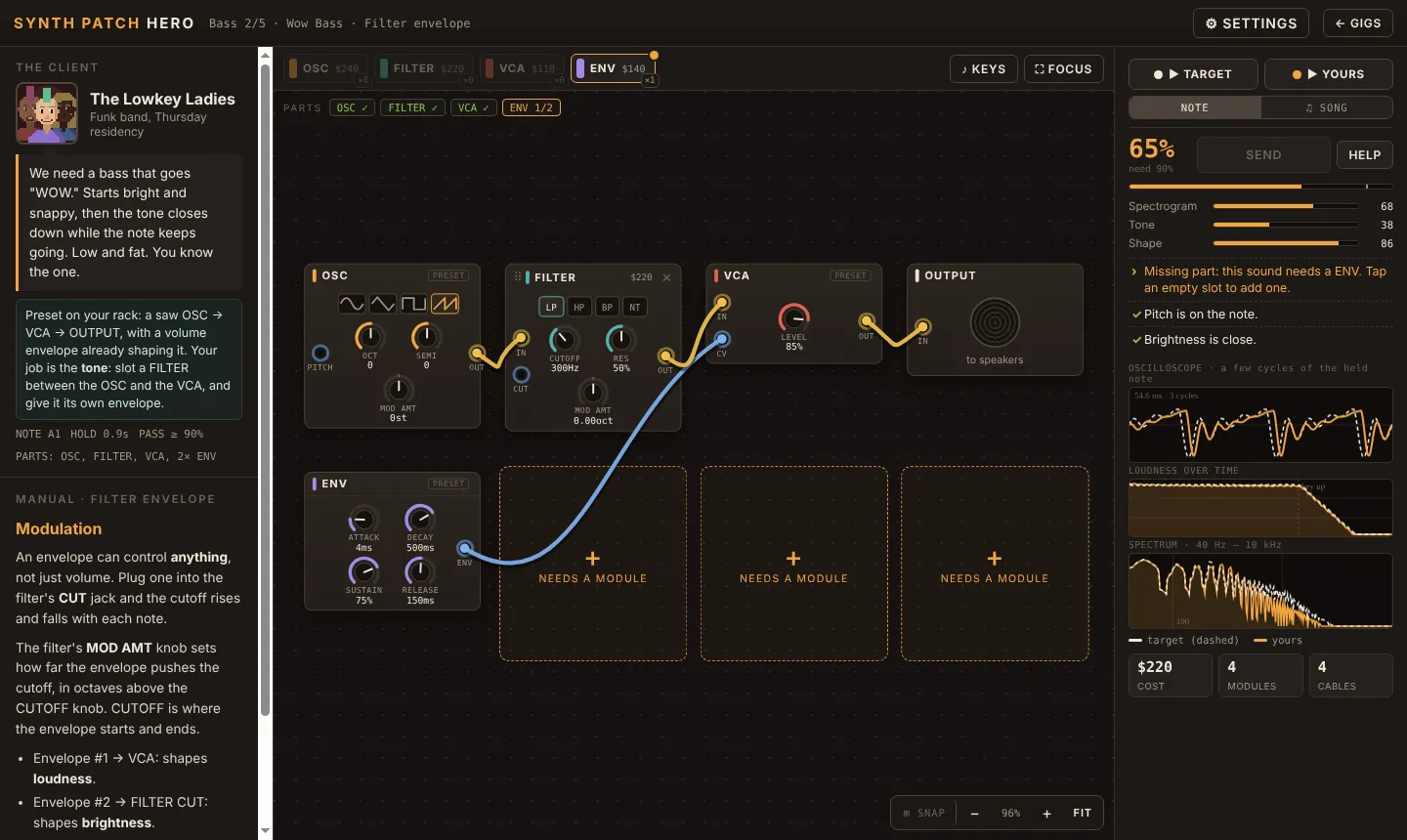
Sheldon Warkentin, a developer in Calgary, introduced the game in a Show HN post on Hacker News on November 24, 2026. They wrote that they wanted to build synth patches on purpose rather than by chance, and made the game "with the help of our friend Claude."
The public GitHub repo shows how the code came together. All 52 commits list Claude as the author, each with a link to the same Claude Code session, and "claude" is the only listed contributor. The first commit, on November 21, was a single-file prototype with 14 gigs. Over the next three days the history adds a phone layout, MIDI input, the Help system, phone haptics, a much larger curriculum, an advanced tier, demo songs and a step sequencer; on November 24 came Comb Lab and Industrial chapters.
According to the README, the game needs no build step and no outside libraries, just HTML, CSS and JavaScript running on the browser's Web Audio API. Sounds come from the game's own synth engine and the client portraits are pixel art drawn in code, so the repo holds no image or audio files beyond icons and screenshots. The repo's CLAUDE.md, the instructions file Claude Code reads, tells it to run the headless-Chrome tests before every commit and never to loosen the scoring bands just to make a change pass.
Warkentin has started adding lessons for real hardware, so far three for Elektron's Digitone II, and the game's gear settings list more devices as coming later. The Show HN post had 131 points and 27 comments when we checked on November 27, and Hacker News lists it at number 25 among its November 26 front-page stories. Replying to a commenter there, Warkentin said they would add a way to hide the visual clues so players rely on their ears.