In a devlog on itch.io, IzHard describes the team as two people: a game designer who works in Unity and had never made anything in Unreal, and a 3D artist. "Every line of C++, every shader, build, multiplayer test and package was done by an AI agent (Claude Code) driving the editor through the official Unreal MCP server," the developers wrote. They say their own job was to set the vision, play each build and decide what stayed. The devlog sets out the process below.
TAKE ZERO
- Windows
Summary
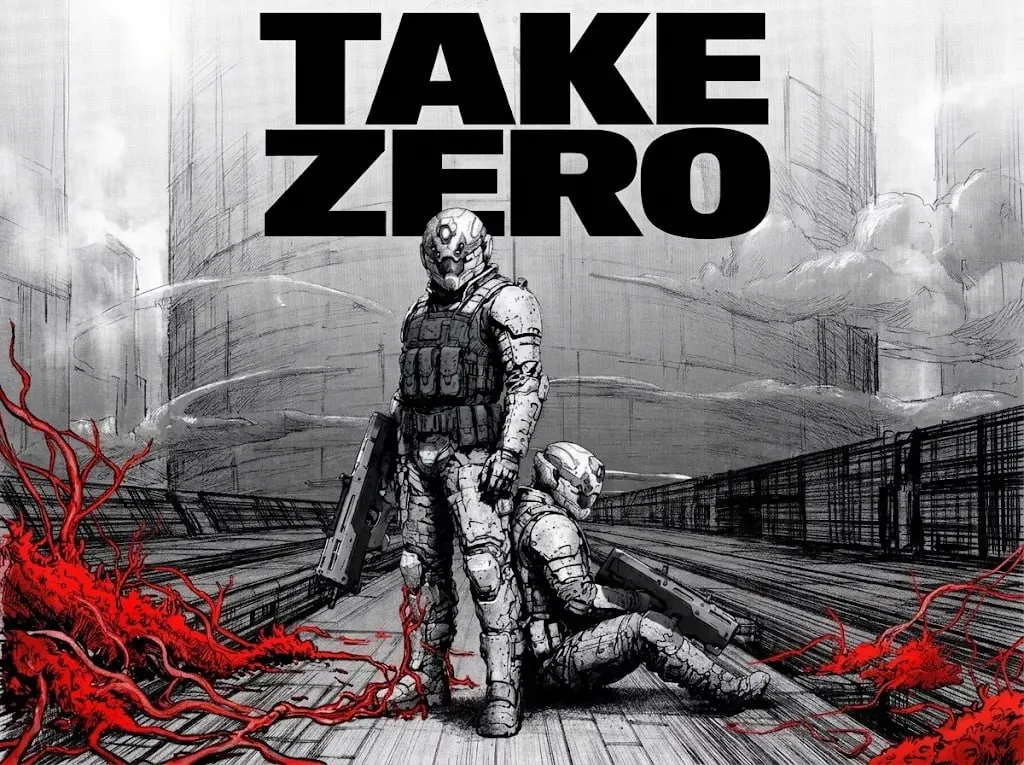
TAKE ZERO is a first-person co-op extraction shooter from IzHard, released on itch.io on November 15, 2026 as an entry in Epic's AI MegaJam. Players are scavengers inside an endless concrete megastructure that an AI kept building after it was told to house everyone. They collect loot, fight the creatures and bosses living there, then hold a circle until a lift arrives to take them out. The itch.io page says it supports online co-op for up to 8 players and is fully playable solo, with levels generated procedurally and an "AI director" that watches how a squad plays and stages surprises against it. It is drawn in black-and-white ink with red reserved for danger. The game is a 479 MB Windows download at name-your-own-price, and itch.io lists an average session of about half an hour. Solo play works without Steam; online co-op needs Steam running, with the host inviting friends through the Steam overlay.
Trailer
How it was made
Step 1 Block out the megastructure in ink
The idea was one the team had shelved for years for lack of engine skills, the devlog says: a co-op climb through an endless megastructure drawn like a black-and-white manga page. On day 1 the artist built a rough blockout of the level, and it was shown under a first version of the ink shader. The shaders, like the code, were written by Claude Code.
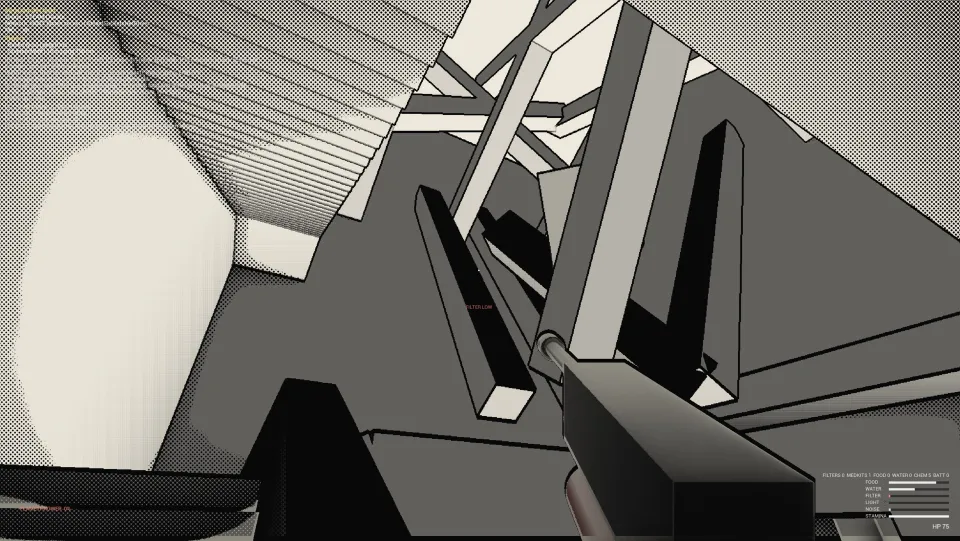
Day 1 build: a gray blockout of stairs and beams under a halftone ink shader, with a plain box for a gun Image: IzHard (itch.io devlog) Step 2 Give the agent one command per job
Each job got a single command: build, run a host plus a client, take a screenshot, package, and smoke-test the package. Tests were command-line switches, with the agent pressing the real inputs and then reading the log for speed, stamina, damage and who had joined. For feedback, the designer played, circled what looked wrong on a screenshot in red, and the agent traced the cause. One night it worked alone, on a midnight brief to make the game a tense, replayable co-op survival by morning, ask no questions and write its decisions down.
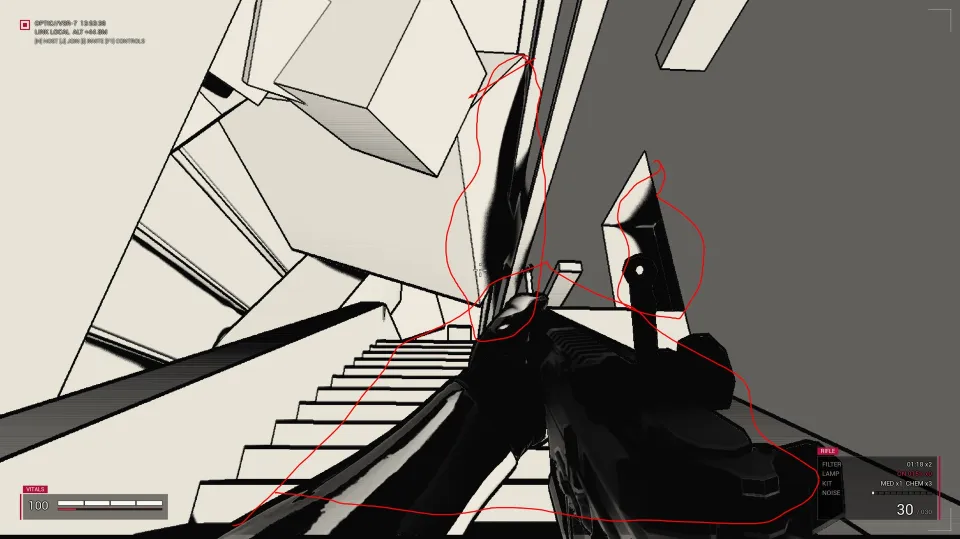
A screenshot from the designer with the rifle and arms circled in red, where the gun rendered as solid black Image: IzHard (itch.io devlog) Step 3 Turn concept sheets into monsters
The monsters began as AI concept sheets, which the devlog credits to Gemini. Tripo3D turned them into 3D models, and a script skinned those to the engine's skeleton. The devlog shows a concept for a mechanical spider and a humanoid walker in the game two days later.
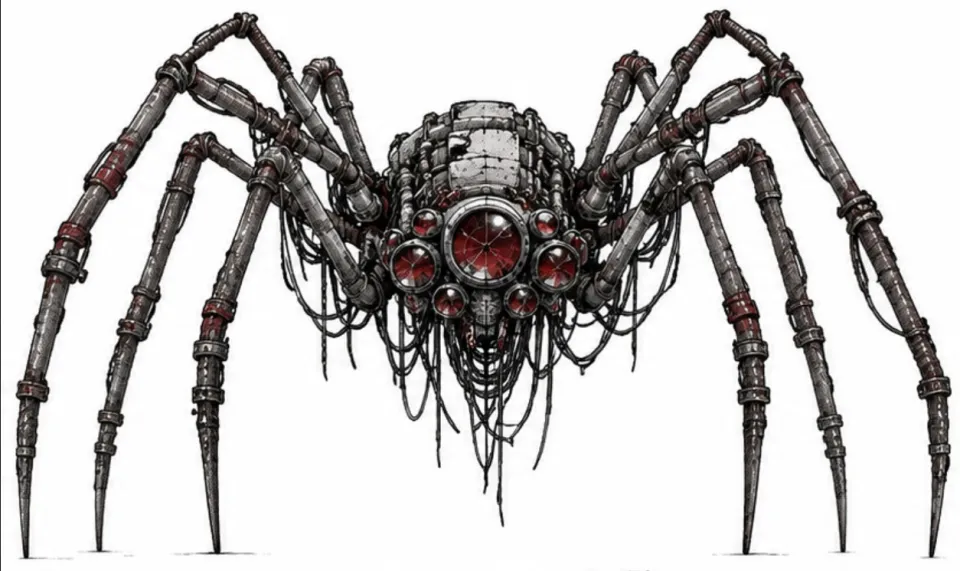
Concept sheet: a mechanical spider with long jointed legs, hanging cables and a cluster of red lenses Image: IzHard (itch.io devlog) 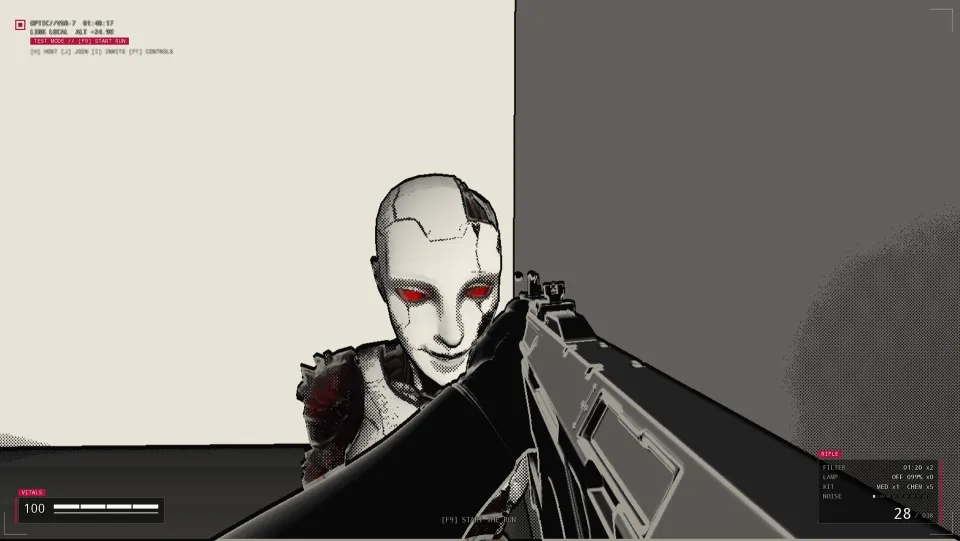
A pale humanoid creature with red eyes and a cracked face, seen over the player's rifle in a test level Image: IzHard (itch.io devlog) Step 4 Ask the agent to build a director
The first playtests were dull, the developers wrote: one level, and monsters that walked straight at the players. Rather than design more content by hand, they asked the AI to build the levels and invent the situations, and became its testers. The resulting director maps the level, watches the players and stages scenes, such as a decoy noise ahead with the real threat behind, lights going out behind the squad, or an attack during a reload, and it eases off when a team is nearly dead. After the first run, every level is generated anew.
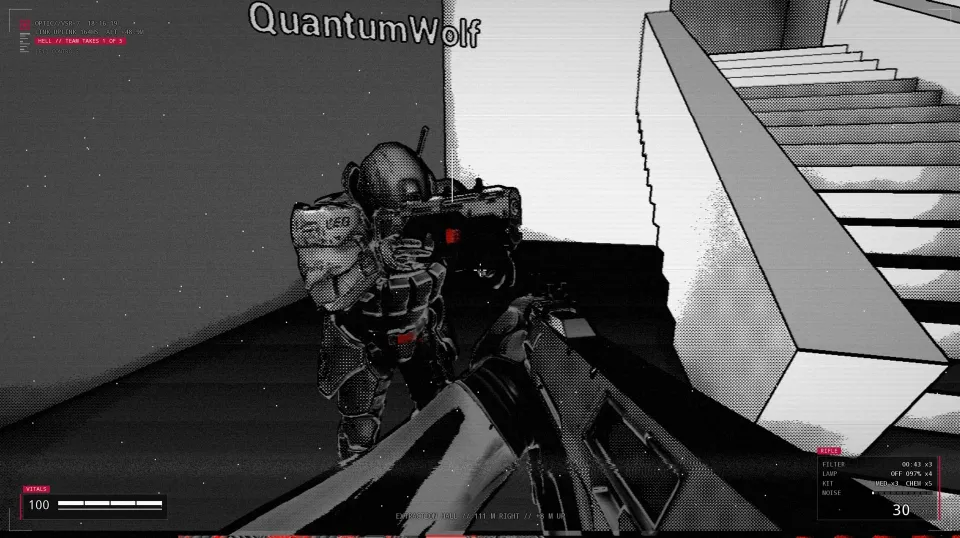
Two-player test over Steam: an armored teammate named QuantumWolf aims a rifle beside a staircase, with a grainy tape-style layer over the ink look Image: IzHard (itch.io devlog) Step 5 Cut what didn't work
A shotgun, a flamethrower, hunger and thirst, and a system of tiers with lifts, shelters and a rising red wave were all built, played and removed, according to the devlog. The team's conclusion was that the agent builds faster than they could judge, so the limit was their own playtime. The image is not a cut feature: it is the finished game's "CUT." screen, which the devlog shows here, seen when a squad spends one of its 5 shared takes (lives).
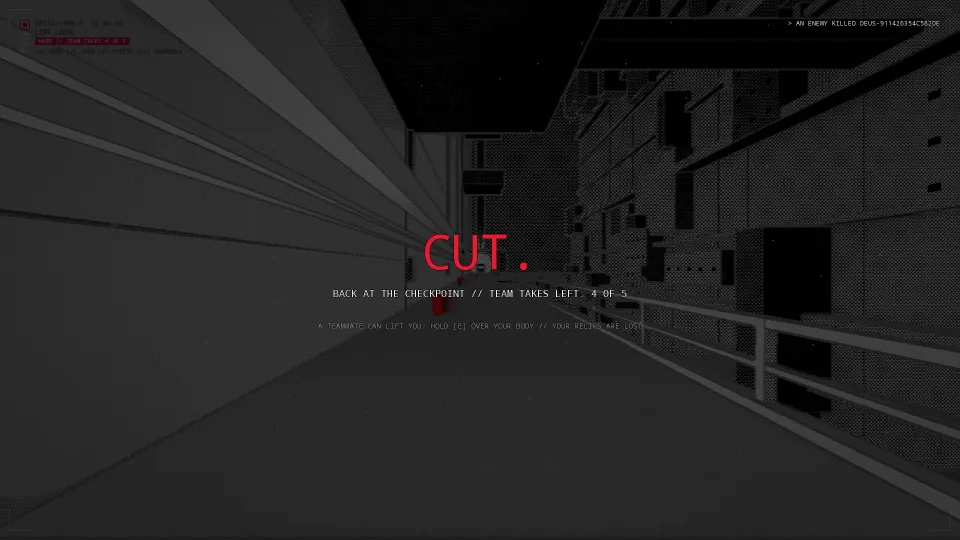
The game's CUT. screen: a dimmed corridor with CUT. in red and a line saying the team has 4 of 5 takes left Image: IzHard (itch.io devlog)
The devlog is specific about what AI did and didn't make. AI-made, it says: all code, shaders and tools (Claude Code), the character models (Tripo3D, from concepts made in Gemini) and synthesized sounds. Not the team's own work and sourced from elsewhere: the first-person arms and their animations, Epic sample animations and sounds, the gun and boss models, and several effects and sounds. The AI disclosure on the itch.io listing is narrower: it marks the game as AI-assisted for code and graphics, not sound, and adds that the code and parts of the director's behaviors were produced with AI agents and reviewed by the team.
The theme of the 2026 Epic AI MegaJam was "Director's Cut", and the jam ran from November 12 to 15, according to its itch.io page, which listed 2,784 entries on the afternoon of November 16. AIGamer's story on the jam's launch is at https://www.aigamer.gg/news/epic-ai-megajam-65k-prizes.
Caveat: the account of how the game was made is the developers' own, and AIGamer hasn't seen the project files or played the game. The devlog says full lists of the sourced assets are in the team's repository, but the game page, the devlog and the jam submission don't link to a public one, so those lists can't be checked. The two pages also differ on the build time: the itch.io page says the game was made in 3 days, and the devlog's title says four. Winners will be announced by January 29, 2027, according to the jam page.
Sources
Details come from the developer's own posts and pages credited below.
- IzHard (itch.io): TAKE ZERO
- IzHard (itch.io devlog): We never opened the Unreal Editor before: how an AI agent built TAKE ZERO in four days
- itch.io: TAKE ZERO by IzHard for 2026 Epic AI MegaJam (jam submission page)
- Epic Games (itch.io): 2026 Epic AI MegaJam
- TAKE ZERO (YouTube): TAKE ZERO — Co-op Extraction Shooter (Epic AI MegaJam 2026)
- AIGamer: Epic opens AI MegaJam with $65k in prizes after saying AI is optional
Image: IzHard
Written in our own words; quotes are marked and credited. How we report